

I see many people reporting shin splints in social media fitness groups. I can feel their frustration on how the pain makes it nearly impossible to continue running. Some give up entirely, while others turn to lower-impact activities.
I haven’t experienced shin splints myself, but I’ve watched the frustration ripple through forums, comment threads, and recovery diaries. It’s a pain that derails progress and dims motivation.
So I listened. And I built this post for you.
In this post, I’ll explore what shin splints are, why they happen, and how runners and fitness enthusiasts can heal, rehabilitate, and possibly come back stronger.
I’ve always maintained that if you’re running after 40, you will experience pain. Some pains build you and make you stronger, but pains like shin splints can worsen if left unaddressed. That said, it’s not the end of your running journey.
With the right approach, you can resolve it, grow stronger, and return to doing what you love. Many runners have put this injury behind them and are now enjoying free strides and easier breathing – and you can too.

What Are Shin Splints, Really?
Shin splints are classified as an overuse injury, which means they don’t typically result from a single impact or isolated event. Unlike the familiar soreness that follows a tough workout, this pain is often felt along the inner edge of the lower shinbone. It tends to build gradually, surfacing only after your body’s subtle warning signs have been overlooked for an extended period.
Medically referred to as medial tibial stress syndrome (MTSS), shin splints represent a stress response from your body. Unlike the familiar soreness that follows a tough workout, this pain is often felt along the inner (medial) edge of the lower shinbone, where muscles and connective tissues, especially the tibialis posterior, repeatedly tug on the bone’s lining (called the periosteum). It tends to build gradually, surfacing only after your body’s subtle warning signs have been overlooked for an extended period.
This isn’t the kind of pain you can simply push through. Continuing to run while experiencing shin splints can severely compromise your form, increase biomechanical stress, and potentially lead to more serious injuries – such as stress fractures.
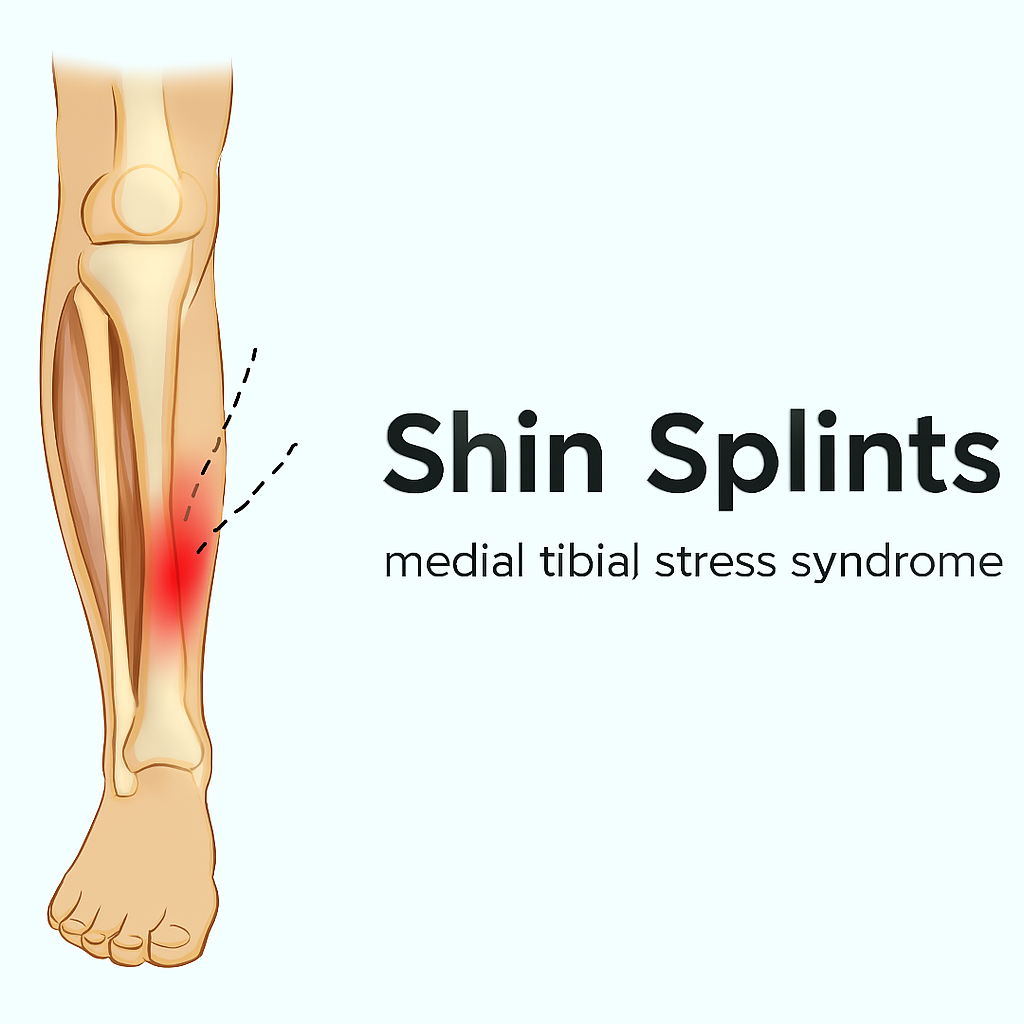
Shin splints are especially common among individuals who engage in repetitive, high-impact activities like running, dancing, or military-style training. The condition is often misunderstood or misdiagnosed, which makes early recognition and intervention all the more important.
Common Causes of Shin Splints in Runners – and Prevention Tips
I’m clubbing shin splints causes and prevention tips together, so you get everything in one place. It may run a little long, but it’s worth the read if you want to enjoy your running journey with fewer setbacks. Well, there’s no such thing as “injury-free,” but we do our best to stay ahead of the pain.
Overtraining
One of the most common causes of this overuse injury is overtraining. Many runners get swept up in the personal best scores they see on social media and want to replicate them immediately. They skip the vital steps of progression and suddenly ramp up speed, distance, or session duration. Shin splints often haunt those who increase frequency without allowing enough time for post-run recovery.
Long story short: prepare your body before lifting your benchmark. Those clocking impressive speeds and distances have trained for years, and they support their intensity with strength and mobility work. If you’re running after 40, don’t get carried away by how well others are doing. Train smart. Give your body time to absorb progressive overload.
Poor Footwear Choices
Our feet weren’t designed for restrictive footwear, especially shoes that limit toe movement, misalign the ball or heel, or force unnatural arch support. But since we need shoes for road and trail protection, the least we can do is choose ergonomically designed ones that allow natural foot movement.
Breathability and sweat-wicking features are also key. Overly warm and slippery feet can alter form and cause toe impact, increasing the risk of shin splints. Avoid buying shoes based solely on style. Replace them once they show signs of wear – usually after 300 km of use.
Personally, I’m not a fan of spongy soles. I believe our real shock absorbers are our feet, knees, and hips. But if they work for you, go ahead. For strength and mobility training, I recommend barefoot or minimalist soles.
Hard Surfaces
Running on hard surfaces like concrete or asphalt isn’t the issue – it’s more about how you run on them. Pavement running can disrupt proper foot placement due to uneven blocks. Many blame the hard surface, but I’d point to poor form and hard foot-strikes instead.
If the surface is flat, hardness shouldn’t matter much, provided you maintain proper form and get a soft landing on each step. However, if you’re dealing with muscle, tendon, or joint injuries, avoid hard surfaces until you’ve healed. Grass, tracks, and sand offer great variation. I personally love barefoot running on sand – it works magic on my feet, and I feel the difference when I’m back in shoes.
Skipping Warm-Ups and Cool-Downs
Shin splints in runners can stem from impact without proper muscle activation. Warm-ups prepare your joints and muscles for action, especially if you’re sprinting or pushing threshold speed. Distance runners may ease in with a slow mile, but seasoned runners never skip warm-ups. They don’t want to waste their first few miles on activation.
A 10-15 minutes warm-up should include dynamic stretches, joint movements, flexions, and extensions. Engage your whole body, from toes to neck, with drills like hopping, bending, crouching, and head movement.
Cool-downs are equally important. They regulate heart rate and blood flow. While skipping them may not directly cause shin splints, it disrupts recovery. Use static or slow dynamic stretches like bodyweight squats and lunges. Avoid aggressive movements, because your muscles and ligaments are already strained. I learned this the hard way after a football game.
Self-Coaching Mistakes
Self-coaching doesn’t automatically cause shin splints, but it can if you’re not open to learning. Solo running is a joy, and I’m a self-trained runner who can clock 10 km anytime. But it took years to get here. Running has transformed my body and taught me more than any textbook, but I’ve had my share of injuries.
Early on, I ignored strength and mobility work. I didn’t get shin splints, but I did face Achilles tendinopathy, a meniscus tear, and a few joint twists. Pain can be a dampener -especially for runners after 40.
Bottom line: self-coaching is fine if you’re willing to learn and adapt every session.
Emotional Drivers
Emotions can be powerful motivators, but also risky if you’re chasing fitness after 40. It’s wonderful that you’re working on your health, but you must also learn when to slow down, pause, or even step back, whenever needed.
Chasing progress too fast, ignoring pain, or fearing you’re falling behind can cloud your judgment. Shin splints in runners is just one of the consequences – it can also lead to other running injuries. Progressive overload is great, but only if your body is ready. Otherwise, it will crumble under pressure.
Prepare your body. Give it time to adapt before claiming a new threshold. Don’t get swept up in what others are doing. After 40, your only competitor is yesterday’s version of you. You can reach new levels, but you must train smart, not emotionally.
Early Warning Signs of Shin Splints in Runners – and What to Do About Them
Shin splints rarely arrive unannounced, because they do whisper before they finally scream. If you’re tuned into your body, you’ll notice the subtle cues – those early signals tell you that something’s off. You can take evasive action by catching these signs early and avoid a full-blown shin splints injury.
Shin Splints Signs to Watch For
- Persistent tightness or tenderness along the inner shin, especially after runs
- Dull ache during warm-ups that fades temporarily but returns post-run
- Pain that intensifies with impact – getting down or climbing stairs, jumping, or during downhill strides.
- Localized swelling or warmth along the shinbone
- Changes in gait or form – limping, favoring one leg, or altered foot-strike
- Discomfort when pressing on the shin – especially near the tibialis anterior
What You Can Do When You See the Signs?
- Scale back intensity: Reduce speed, distance, or frequency for a few sessions
- Prioritize recovery: Ice, rest, and gentle mobility or flexibility work can help calm inflammation
- Check your shoes: Reassess footwear that you are wearing – does it fit well and provide ergonomic support, is it work out or gone out of shape
- Strengthen supporting muscles: Focus on calves, ankles, and hips
- Revisit your form: Are you doing soft foot-strikes? Are you maintaining an upright posture? Are your shoulders relaxed?
- Listen to your body: If the pain persists or worsens, pause and seek professional guidance
Shin splints are your body’s way of asking for attention. Don’t wait for the pain to become unbearable. A few smart adjustments now can save you weeks or even months needed for recovery later.
Shin Splints Recovery Roadmap: From Pain to Progress
Recovery from shin splints isn’t just about rest – it’s about listening, adjusting, and rebuilding with intention. If you’re dealing with this injury, here’s a roadmap to help you heal and come back stronger.
Phase 1: Rest and Reset
- Stop impact activities – Running, jumping, or dancing need to pause
- Place an ice pack on the area – 15-20 minutes, 2-3 times a day to reduce inflammation
- Elevate your legs – Especially after long hours of standing or walking
- Avoid painkillers if possible – They mask symptoms, not solve them
- Reflect on what triggered it – Overtraining? Footwear? Emotional drivers? Or any other cause I described above
Phase 2: Gentle Mobility and Strength
- Start with low-impact activities – Swimming, cycling, or walking on soft surfaces
- Introduce mobility drills – Ankle circles, dorsiflexion, toe flexions, calf stretches
- Add load to mobility drills – Once comfortable with seated work, progress to standing drills and gradually add external loads
- Strengthen supporting muscles – Calves, glutes, hips, and core
- Try barefoot drills – On sand or grass to reconnect with natural foot mechanics
- Focus on form – Soft foot-strikes, upright posture, relaxed shoulders
Phase 3: Gradual Return to Running
- Begin with short, slow runs – Preferably on soft surfaces
- Use the 10% rule – Increase distance or intensity by no more than 10% per week
- Alternate run days with recovery days – Let your body absorb the load and rebuild
- Warm-up and cool-down religiously – No shortcuts this time
- Listen to your body – If pain returns, pause and reassess—or seek professional advice
Shin splints may feel like a setback, but they’re also a signal – a chance to rebuild smarter, stronger, and more in tune with your body.
Healing and recovery rarely follow a straight, predictable path. You won’t necessarily feel better every day, and progress might come with setbacks, plateaus, or unexpected dips. But recovery is possible and many runners have done it successfully.
Keep reminding yourself: you’re not broken. You’re recalibrating.
Final Words
If this post on shin splints in runners helped you, made you feel supported, or simply brought more awareness to your fitness journey, I consider that a success for us both.
I create intentional, conversion-ready content for runners, wellness brands, and fitness professionals – blending anatomical clarity with emotional resonance. Whether you need blog posts like this, service pages that build trust, or social media that connects deeply, I’m here to help.
Explore my services or reach out if you’re building something that deserves thoughtful words and strategic care.
Let’s create with purpose. Let’s rebuild with resonance.