
Fascia – it sounds like a funny word, doesn’t it? The first time I heard it, I thought it had something to do with fashion, fabrics, or some new fitness wear trend. Definitely not something hidden inside the body. But fascia is far more fascinating. It’s a thin, web‑like connective tissue network that wraps around everything – muscles, tendons, organs, and nerves – holding it all together like insulation around electrical wires. Quiet, hidden, but absolutely everywhere. That curiosity led me to explore the lesser‑known world of fascia training.
For years, fascia barely got any attention. Trainers talked about building muscle strength. Physiotherapists focused on joints and alignment. Fitness magazines pushed stretching routines for hamstrings or core stability. Muscles and joints were always the stars of the show, while fascia stayed invisible in the background.
The truth is, fascia doesn’t bulge like muscles or move like bones. It’s more like cling film under the skin – thin, silent, and constantly working without drawing attention. And yet, it plays a massive role in how we move, recover, and maintain body balance.
I started digging into fascia training for one simple reason: age. After 40, things change. Running feels heavier, balance gets shaky, and stretching doesn’t bring back that springy feeling. The body starts to feel more like stiff rubber bands left out in the sun.
That’s when fascia training becomes essential. It’s not just another fitness trend – it’s a powerful way to restore mobility, improve performance, and unlock hidden strength and balance that many of us lose with age.
What Is fascia?
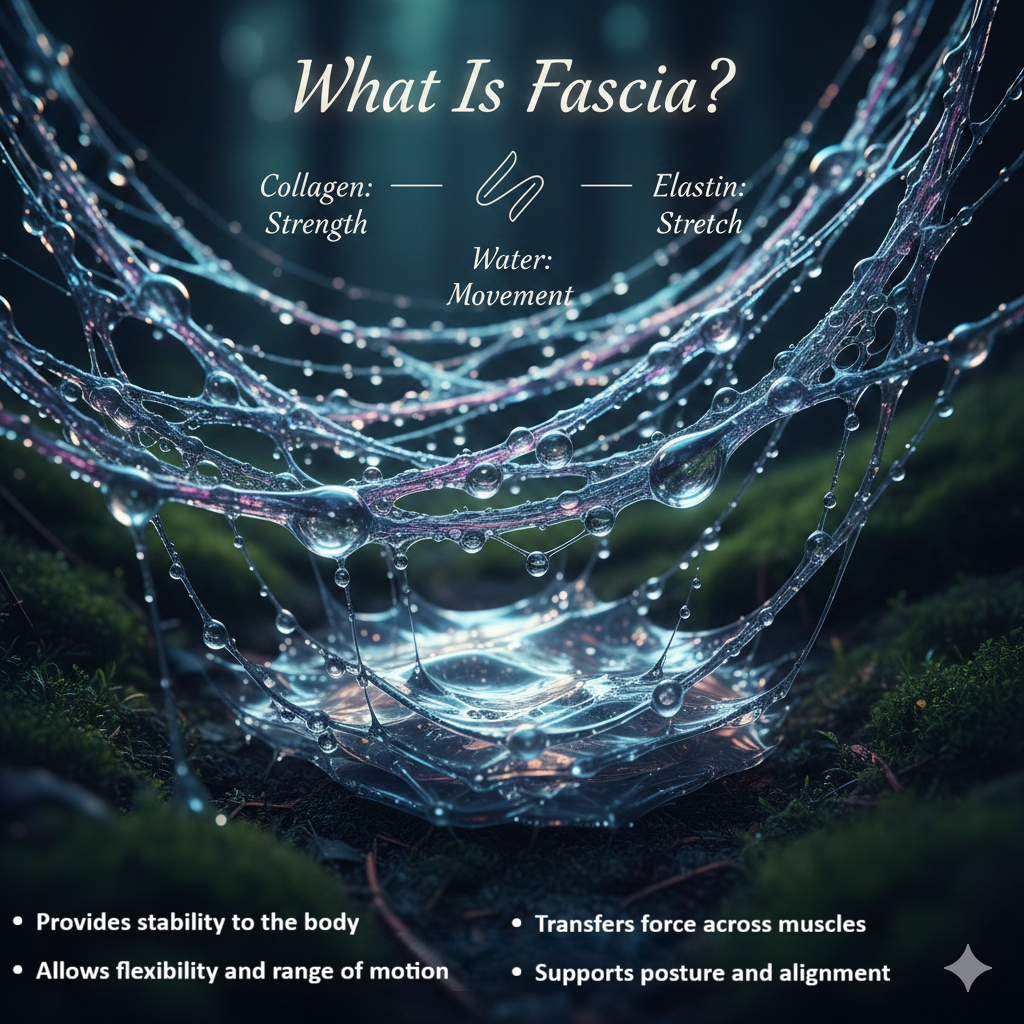
Alright, so fascia is, structurally speaking, made mostly of collagen fibers, elastin, and water. Lots of water, actually – which surprised me. I always imagined it as dry and fibrous, but in reality, it’s hydrated, slippery, and almost gel‑like in some areas. Think of it like a spider web soaked in water: stretchy yet strong.
Structure basics:
- Collagen provides strength and durability
- Elastin allows stretch and rebounds
- Water ensures smooth movement and shock absorption
When fascia is healthy, the layers glide smoothly and movement feels fluid. But when it becomes stiff or dehydrated, it sticks – like cling wrap pressed together.
And the functions of fascia? They’re quite significant:
Main functions of fascia:
- Provides stability to the body
- Allows flexibility and range of motion
- Transfers force across muscles
- Supports posture and alignment
The big role of fascia that most people don’t realize is force transmission. Muscles don’t work in isolation – fascia chains connect them. When you move your arm, the force spreads through fascial lines across the body. It’s a little wild.
Which means movement efficiency depends on fascia health just as much as muscle strength – sometimes even more.
Fascia also plays a key role in injury prevention. When it’s elastic, it absorbs shock. But when it is stiff, injuries happen more easily: pulls, strains, and those random aches that seem to appear out of nowhere.
Why Is Fascia Important?
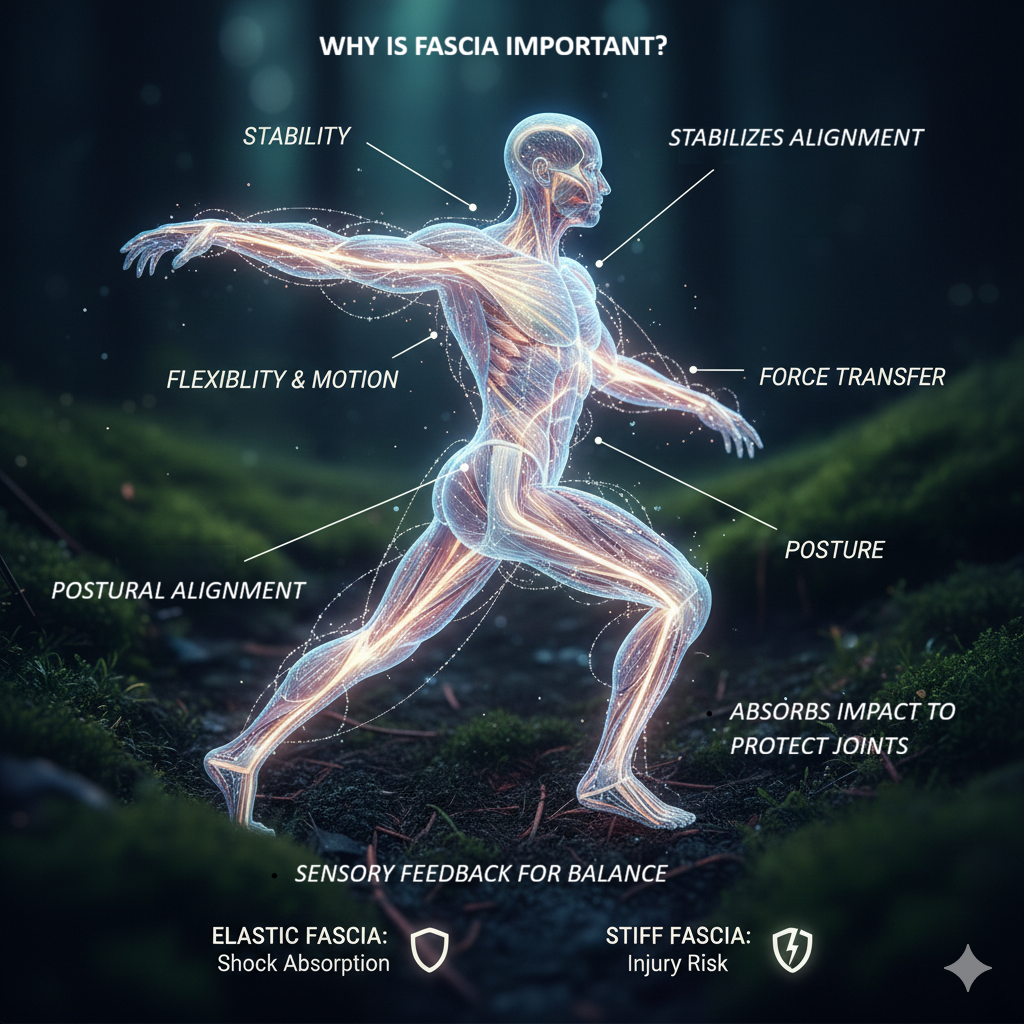
Fascia plays a quiet but massive role in overall movement efficiency and injury prevention, even though most of us rarely think about it. It acts like a continuous web that connects muscles from head to toe, helping distribute force evenly across the body instead of letting one small area take all the load.
When fascia is healthy, hydrated, and elastic, movements feel smoother, lighter, and more coordinated because energy transfers easily between muscle groups. This reduces unnecessary strain and allows the body to perform tasks with less effort and fatigue.
On the injury prevention side, fascia works as a natural shock absorber. Its flexible, spring‑like structure cushions joints, stabilizes alignment, and prevents excessive pulling on muscles and tendons.
But when fascia becomes stiff or dehydrated – often due to aging, inactivity, or repetitive stress – it loses elasticity. This leads to tightness, poor movement patterns, and a higher risk of strains, overuse injuries, and chronic pain. Maintaining fascial health, therefore, is essential for safe, efficient, and pain‑free movement.
The Role of Fascia in Running and Sports
I really started paying attention to fascia last winter while running – one of those cold mornings where the air feels sharp in your nose and you can hear your footsteps too clearly on the pavement.
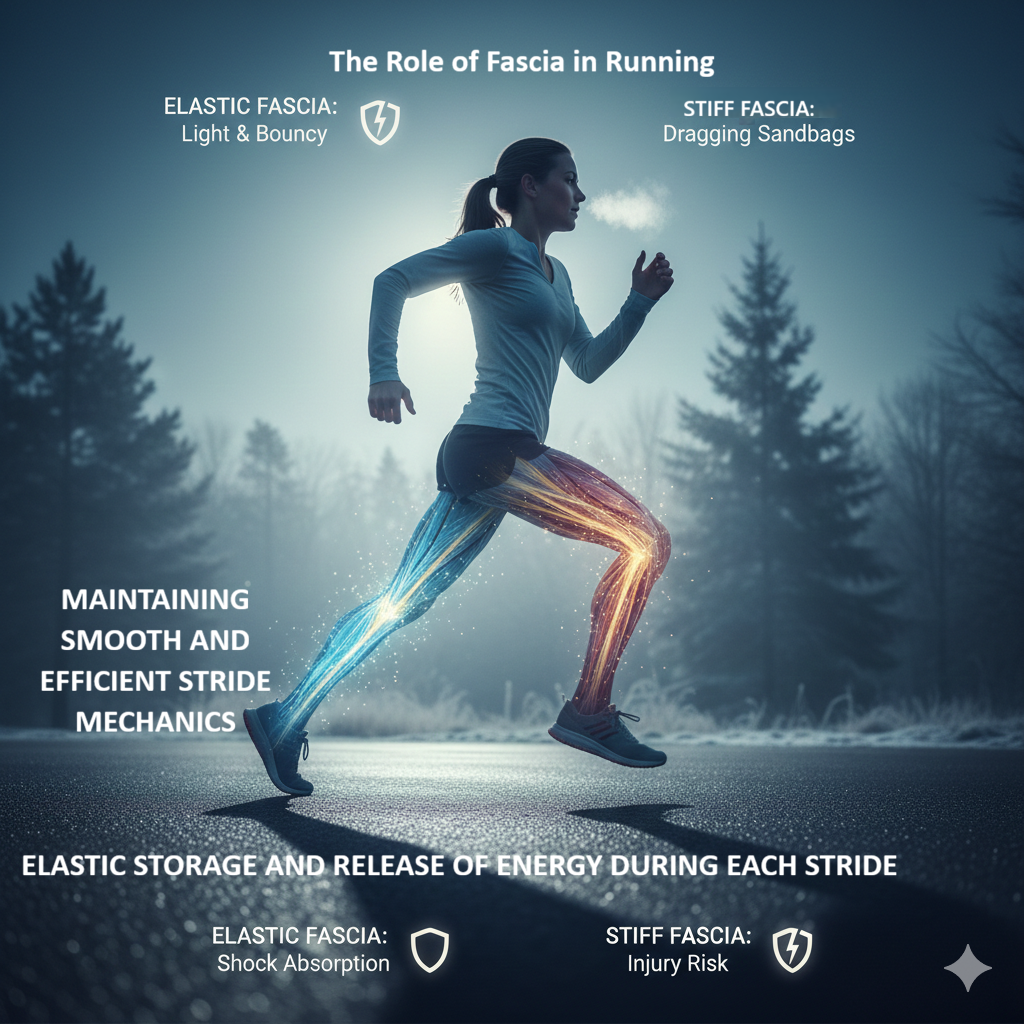
Some days my steps felt light and bouncy, like my body was springing forward without much effort. Other days, it felt like dragging sandbags tied to my legs. That difference? Much of it comes down to fascia working properly.
When fascia is healthy and elastic, it acts like a natural spring system. The moment your foot hits the ground, it stores energy quietly and automatically, then releases it as you push off into the next step. It’s like stretching a rubber band and letting it snap back. You don’t think about it, but it saves a huge amount of muscular effort while running.
In running specifically, fascia helps with:
- Elastic storage and release of energy during each stride
- Maintaining smooth, efficient stride mechanics
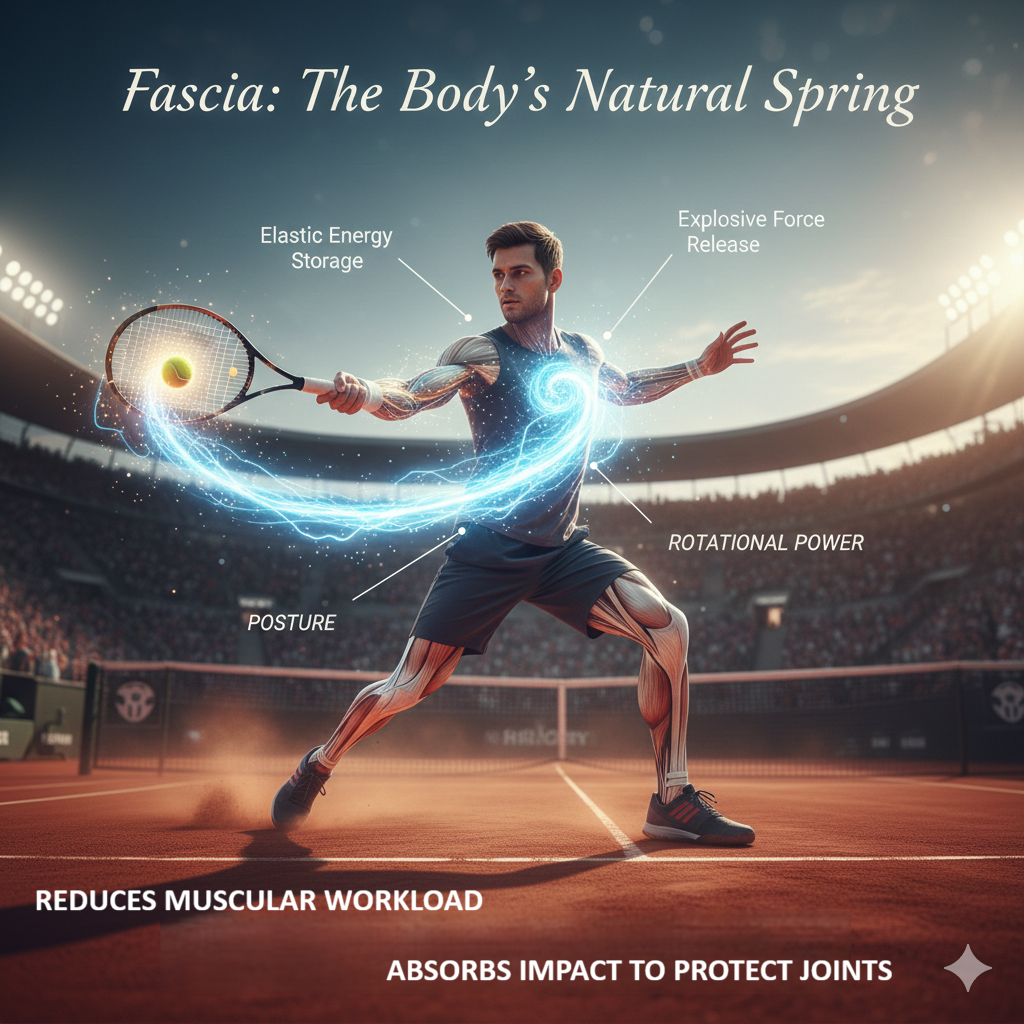
- Reducing muscular workload
- Absorbing impact to protect joints
Without healthy fascia, running feels heavy and inefficient. Muscles are forced to do all the work instead of sharing it with the body’s elastic system. You tire faster, movements feel stiff, and recovery takes longer.
Fascia plays a huge role across different sports
And it’s not just running – fascia plays a huge role across different sports. In sprinting, it contributes to explosive acceleration by rapidly transferring force through the body. For jumping activities, it stores and releases energy to create powerful lift. In sports like tennis, fascia helps transmit rotational power during swings, while in football it supports quick directional changes and stability during sudden stops.
Basically, fascia connects movement into one continuous chain instead of isolated muscle actions. Some experts even call it the “hidden athletic system.” You can’t see it working, but you definitely feel the difference when it’s not functioning well.
Fascia also plays a significant role in injury prevention. By distributing force evenly across tissues, it reduces overload on individual muscles, lowering strain, fatigue, and those nagging aches that often appear after intense activity.
Benefits of Fascia Training
Fascia training has gained attention in recent years because of its powerful impact on how the body moves, performs, and recovers. Unlike traditional strength training, which focuses mainly on muscles, fascia training targets the connective tissue network that surrounds and links muscles, joints, and organs.
When this network is healthy, hydrated, and elastic, the body moves more freely and efficiently. One of the clearest advantages people notice is greater ease of movement, along with increased flexibility. Fascia responds well to dynamic, flowing movements, stretching, and myofascial release techniques such as foam rolling. These practices help loosen stiffness, improve tissue hydration, and restore natural elasticity, allowing joints to move through a wider and smoother range of motion.
Fascia – The spring system in the body
Another major benefit is enhanced running efficiency and athletic performance. Fascia acts like a spring system in the body, storing and releasing energy during movement. With proper fascia training, this elastic function becomes more effective, meaning the body requires less muscular effort to perform the same actions. Runners often experience lighter strides, better endurance, and reduced fatigue because energy transfer between muscles becomes smoother and more coordinated. Athletes in sports involving jumping, sprinting, or rapid directional changes also benefit from improved power output and fluid movement patterns.
Fascia training also plays a crucial role in reducing injury risk and supporting faster recovery. Healthy fascia distributes physical stress evenly throughout the body, preventing excessive strain on individual muscles or joints. When fascia becomes tight or dehydrated, it can create movement restrictions that lead to imbalances and overuse injuries. Regular fascia‑focused exercises help maintain tissue elasticity, reduce muscle soreness, improve circulation, and accelerate recovery after workouts or physical activity.
In the long term, fascia training builds resilience within the body. Athletes who consistently include fascial exercises often experience better adaptability to physical stress, improved posture, and sustained performance levels over time. By maintaining tissue elasticity and structural balance, fascia training supports longevity in both sports and everyday movement, making it an essential component of overall physical health.
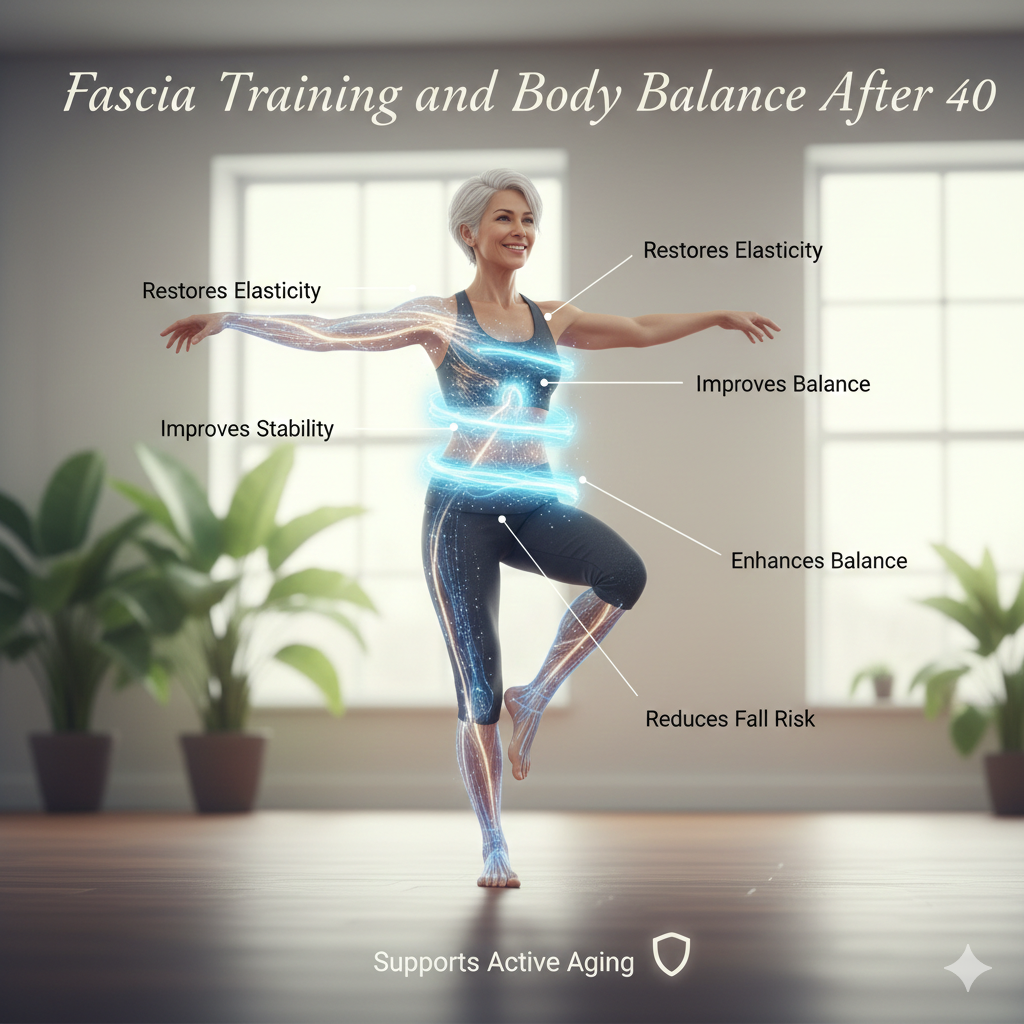
Fascia Training and Body Balance After 40
This is where things start to feel very real. After 40, fascia doesn’t suddenly fail or collapse – but it does change quietly in the background. It gradually loses hydration and, over time, becomes stiffer and less elastic, almost like a rubber band left out in the sun that turns hard and brittle.
As this happens, mobility naturally decreases. Movements that once felt smooth and effortless begin to feel tight or restricted. Balance can weaken too, because fascia plays a key role in stabilizing the body. Posture may shift subtly, sometimes without us even noticing at first.
I personally began noticing small signs: tripping slightly more often, struggling to stay steady when standing on one leg, and feeling unexplained tightness in areas like my hips or upper back. It turns out fascia is deeply involved in proprioception – the body’s ability to sense position, movement, and balance internally.
Fascia helps with:
- Postural alignment
- Sensory feedback for balance
- Coordinated movement
- Stability during dynamic motion
When fascia stiffens, the body loses some of that internal awareness. That’s one reason falls become more common after 40 – not just due to muscle weakness, but also fascial stiffness.
The good news? Training can help reverse some of these changes.
Benefits of fascia training after 40:
- Restores elasticity
- Improves stability
- Enhances balance
- Reduces fall risk
- Supports active aging
And the methods are surprisingly simple:
Practical fascia training techniques:
- Dynamic stretching with flowing movements
- Foam rolling and myofascial release
- Elastic rebound exercises (light bouncing motions)
- Balance drills such as single‑leg stability work
These aren’t intense workouts. They’re more like a gentle re‑awakening of the body’s spring system. I like to think of it not as fighting aging, but as keeping tissues hydrated, elastic, and alive.
Research Insights: Fascia Training After 40
Recent studies have shifted the way experts view fascia. Once dismissed as “packing material,” fascia is now recognized as a dynamic tissue that adapts to movement and hydration. Research highlights several key findings:
- Hydration & Elasticity Decline with Age: Fascia gradually loses water content and elasticity after 40, contributing to stiffness and reduced mobility. Targeted fascia training helps restore hydration and pliability.
- Neurological Role in Balance: Fascia is rich in sensory nerve endings, making it essential for proprioception – the body’s ability to sense position and balance. Training improves stability and reduces fall risk in midlife.
- Performance Enhancement: Studies show fascia acts like an elastic spring, storing and releasing energy during movement. Athletes with healthy fascia demonstrate greater efficiency, endurance, and explosive power.
- Pain & Recovery: Fascia training techniques such as myofascial release and dynamic stretching improve circulation, reduce adhesions, and support faster recovery from exercise or injury.
- Longevity & Active Aging: Researchers emphasize fascia’s role in maintaining posture, mobility, and resilience, making fascia training a cornerstone of active aging and long‑term health.
Digital Resources for Fascia Training on Amazon
If you’d like to explore fascia training further, here are some highly rated digital resources available worldwide on Amazon Kindle. They’re instantly downloadable, making them accessible from anywhere.


Conclusion
So yes, fascia – this quiet, almost invisible tissue that hardly anyone talks about, yet it’s everywhere in the body. It wraps around muscles, supports organs, connects movement chains, and essentially holds everything together like an internal web.
You don’t notice it when it’s working well, but the moment it becomes stiff or dehydrated, you start feeling the difference in small, frustrating ways. Movements feel tighter, reactions slower, and recovery takes longer.
In sports, fascia plays a huge role in improving efficiency and performance. It helps store and release energy, making movements smoother and less tiring. That’s why athletes with healthy fascia often move with an effortless flow, transferring force quickly without wasting energy.
In daily life, fascia quietly maintains balance, posture, and mobility. It supports body awareness, allowing you to move confidently without constantly thinking about coordination. After 40, this becomes even more important because fascia naturally begins to stiffen and lose elasticity over time. Without proper care, this can lead to reduced flexibility, slower movement, and increased injury risk.
The interesting thing about fascia training is that it isn’t flashy or intense. There are no heavy weights or exhausting routines involved. Instead, it focuses on consistent, gentle, elastic movements – stretching, bouncing, and mindful mobility work.
And honestly, it may be one of the most important forms of training for long‑term health. Because strength alone doesn’t guarantee smooth movement later in life, and flexibility alone isn’t enough either. What truly keeps the body feeling young is that springiness – the subtle elasticity of fascia – like oiling the body’s hidden machinery before it starts creaking too loudly to ignore.
Want professional content writing services to turn your topic ideas into engaging blog posts that your target readers love?
 Chat With Nady on WhatsApp
✍️ Explore Our Blog Writing Services
Chat With Nady on WhatsApp
✍️ Explore Our Blog Writing Services