
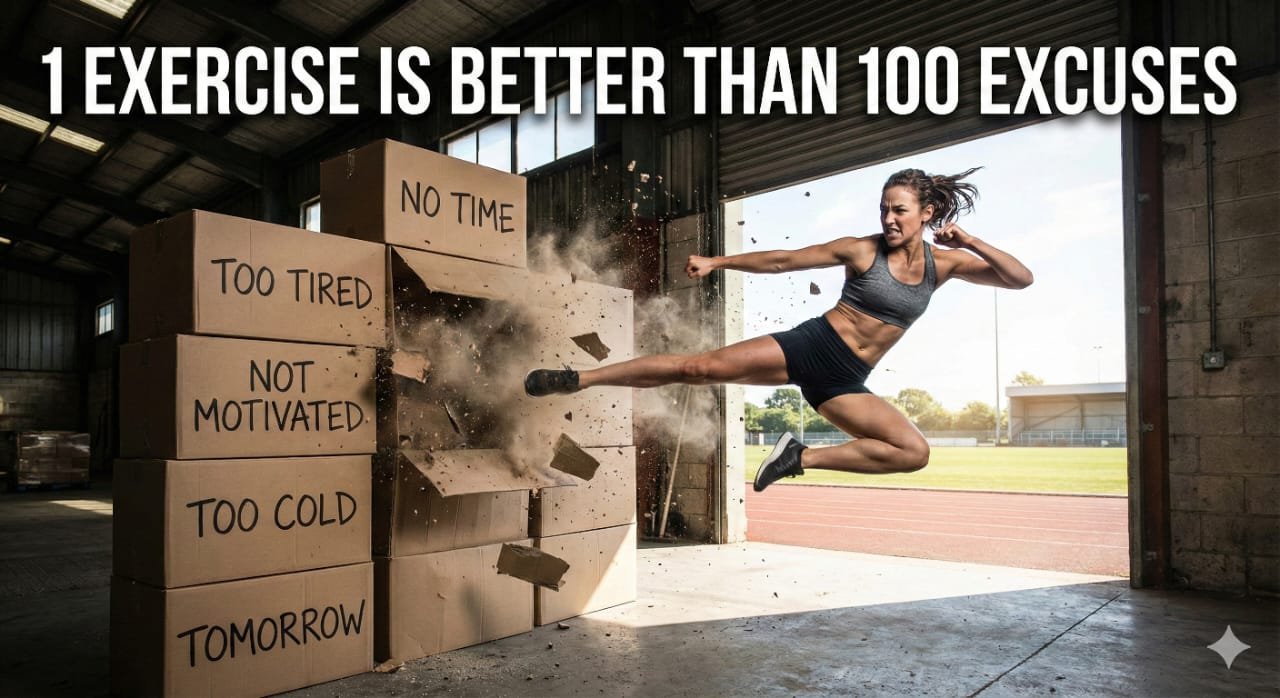
- Are These Top 10 Fitness Excuses Actually True?
- Top Fitness Excuses #1: “I’ll start on Monday”
- Top Fitness Excuses #2: “I don’t get time to workout”
- Top Fitness Excuses #3: “Protein is bad for your kidneys”
- Top Fitness Excuses #4: “Running is bad for your knees”
- Top Fitness Excuses #5: “I’m too old to start working out”
- Top Fitness Excuses #6: “I don’t want to lift weights because I’ll get bulky”
- Fitness Excuse #7: “I’ll start working out when I lose weight”
- Fitness Excuse #8: “Obesity runs in our family”
- Fitness Excuse #9: “I don’t want to sweat”
- Fitness Excuse #10: “I don’t need workouts because my job gives me enough movement”
- One Workout Beats a Hundred Excuses
All of us wish to become healthy and fit, but many of us struggle with the effort it requires. Some begin by making healthier food choices and resisting untimely cravings, which is a great step – but it’s only one part of the fitness journey. While nutrition is vital for good health and wellbeing, it must be supported with regular workouts and enough rest for our muscles to recover and repair each day. That’s where fitness excuses often creep in – the subtle justifications we use to skip movement, delay progress, or convince ourselves that effort can wait.
Still, there seems to be a natural resistance to the pain and effort that come with physical exercise. To ease discomfort or fear, people often lean on fitness excuses that make them feel better in the moment.
In this post, I’ll explore some of the most common fitness excuses people give to avoid working out and examine how much truth they hold. Are they genuine barriers, or simply mental roadblocks that prevent us from testing our limits?
Of course, many individuals face real health and medical challenges that make exercising difficult or even out of question. This post is not meant to discourage or judge anyone in that situation. Instead, it’s a gentle nudge to those who use excuses as a shield – and a chance to see what science and research really say about the myths that stop us from becoming functionally fit.
Let’s check out the top 10 fitness excuses people make – and what science says about them
Are These Top 10 Fitness Excuses Actually True?
We’ve all made fitness excuses – but are they valid? This post breaks down the top 10 excuses people use to avoid exercise and reveals what science really says about each one.
Top Fitness Excuses #1: “I’ll start on Monday”
What Science Says:
- Delaying action dilutes determination; starting immediately builds long‑term consistency ₍₁₎.
My Take:
Saying “I’ll start Monday” is often a way of postponing what we already know we should begin. The truth is, waiting rarely makes it easier – and science shows that starting right away, even with small steps, builds consistency. For many health conditions, doctors actually recommend safe forms of movement to help manage symptoms and prevent deterioration. Of course, the workout plan may need to be adjusted and monitored carefully, but movement is usually part of the solution, not the problem.
Mondays can make sense once you’ve built a weekly routine, but they don’t need to be the first day you begin. Start today – even if it’s just a 15‑minute walk, a short cycle ride, a dip in the pool, a few yoga stretches, or simple bodyweight exercises. Small actions taken today create momentum for tomorrow, and science shows that consistency in these small steps is what builds lasting fitness habits.
💡 “If fitness only started on Monday, most people would never begin – because Monday never really comes.”
Top Fitness Excuses #2: “I don’t get time to workout”
What Science Says:
- Even short bouts of exercise (10–15 minutes) improve cardiovascular health and energy ₍₂₎.
- WHO guidelines emphasize 150 minutes of moderate activity weekly, broken into small chunks ₍₃₎.
- “Exercise snacks” like stair climbing or bodyweight moves boost fitness when done consistently ₍₄₎.
My Take:
Most of us can usually find at least 30 minutes for daily movement – that’s less than 3% of the time in a day. And if carving it out in one stretch feels impossible, break it into two 15‑minute sessions. I once heard this excuse from a businessman who spent his lean store hours scrolling reels and snacking on chips. That downtime could be turned into an opportunity for 5–10 pushups or a quick stretch.
It helps to find excitement in movement, especially when our jobs demand that we sit in one place for long hours. Once we start looking at movement as a chance to recharge rather than a burden, the opportunities reveal themselves.
💡 “If lack of time really stopped workouts, busy people would never get fit – but science proves otherwise.”
Top Fitness Excuses #3: “Protein is bad for your kidneys”
What Science Says:
- Protein intake is safe for healthy individuals; risks apply mainly to those with kidney disease ₍₅₎.
- Athletes and active individuals often require higher protein intake to support muscle repair and recovery ₍₆₎.
My Take:
Protein has always been part of my functional fitness approach, and I get enough fuel from natural foods like meat, fish, eggs, and milk. For me, supplements aren’t necessary because my goal is strength, mobility, endurance, and overall health — not bodybuilding. But I see no problem with supplements if someone’s goal is hypertrophy and their diet alone can’t support that.
The key is understanding your own fitness goals. If you’re training for functional strength and everyday performance, natural food proteins are often sufficient. If you’re chasing hypertrophy or have higher strength demands, supplements can be a useful tool. What matters most is balance, consistency, and making sure your protein intake matches your activity level — not fearing it because of outdated myths about kidney health.
💡 “If protein really wrecked kidneys, half the gym would be on dialysis – but science says otherwise.”
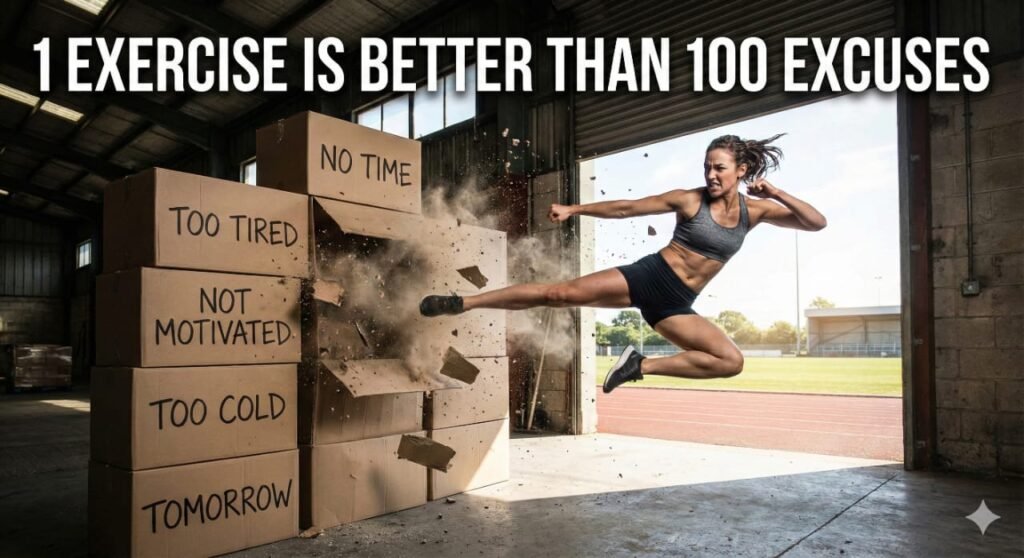
Top Fitness Excuses #4: “Running is bad for your knees”
What Science Says:
- Long‑term studies show recreational running lowers risk of knee osteoarthritis compared to sedentary lifestyles ₍₇₎.
My Take:
At over 50, and after 17 years of running six days a week, my knees have only grown stronger with time. Running often gets unfairly blamed for knee problems, but the truth is that inactivity is usually the bigger culprit.
Our joints, muscles, tendons, ligaments, and fascia thrive with movement, and when we strengthen the muscles around them, they become more resilient. Recreational running — when done at a comfortable pace, with proper footwear, and good running form — can improve joint health, bone density, and overall endurance.
Running can contribute to knee issues if it’s your only form of exercise. Relying only on cardio, without strength training, can accelerate age‑related muscle loss and cause tightness in tendons and ligaments. If you want to continue running after 40 or at any stage in life, it’s essential to include strength and mobility training alongside your running routines.
💡 “If running really destroyed knees, every marathon finisher would be limping into retirement – but science shows the opposite.”
Top Fitness Excuses #5: “I’m too old to start working out”
What Science Says:
- People can build strength, balance, and mobility well into their 70s and 80s ₍₈₎.
- Resistance training slows age‑related muscle loss and reduces fall risk ₍₉₎.
- Exercise improves cardiovascular health, bone density, and cognitive function at any age ₍₁₀₎.
My Take:
Age is often used as an excuse, but movement and workouts are among the best anti‑aging tools we have. At 50+, I can say firsthand that training consistently keeps me strong, mobile, and energized. The body doesn’t stop responding to exercise just because we cross a certain birthday – it simply requires smarter planning and dedication.
If you decide to start building fitness later in life, begin with low‑impact activities like walking, swimming, or cycling, and add strength and mobility training gradually. Focus on functional movements that make everyday life easier — squats for sitting and standing, pushups for upper body strength, stretches for flexibility.
The truth is, age makes exercise more important, not less. In fact, it becomes essential as we grow older, because it slows down the natural decline of both body and mind.
💡 “If age really stopped fitness, grandparents wouldn’t be chasing grandkids – but science and reality show they can.”
Top Fitness Excuses #6: “I don’t want to lift weights because I’ll get bulky”
What Science Says:
- Strength training helps preserve lean muscle mass, improve bone density, and boost metabolism ₍₁₁₎.
- “Bulking up” requires heavy training, high calorie intake, and hypertrophy‑focused programming ₍₁₂₎.
- Recreational weightlifting typically improves strength, posture, and functional fitness — not oversized muscles ₍₁₃₎.
- Women have lower testosterone levels, making extreme muscle growth far less likely without deliberate hypertrophy training ₍₁₄₎.
My Take:
Weight training is one of the most misunderstood aspects of fitness. Many people avoid it out of fear of looking “too bulky,” but the reality is that lifting weights builds strength, mobility, and resilience — not instant bodybuilder muscles. As someone who has focused on functional fitness, I use moderate weights to support endurance, joint health, and everyday performance.
Getting bulky requires hypertrophy‑specific training, progressive overload, and a calorie surplus. If your goal is simply to stay strong, lean, and mobile, weight training will help you achieve that without changing your body shape dramatically. In fact, it’s one of the best ways to slow age‑related muscle loss and keep your metabolism active.
So, whether you’re in your 20s or your 50s, lifting weights is not something to fear – it’s something to embrace. Weight training is the foundation of longevity.
💡 “If lifting dumbbells really made people bulky, every gym goer would look like Schwarzenegger – but science says otherwise.”
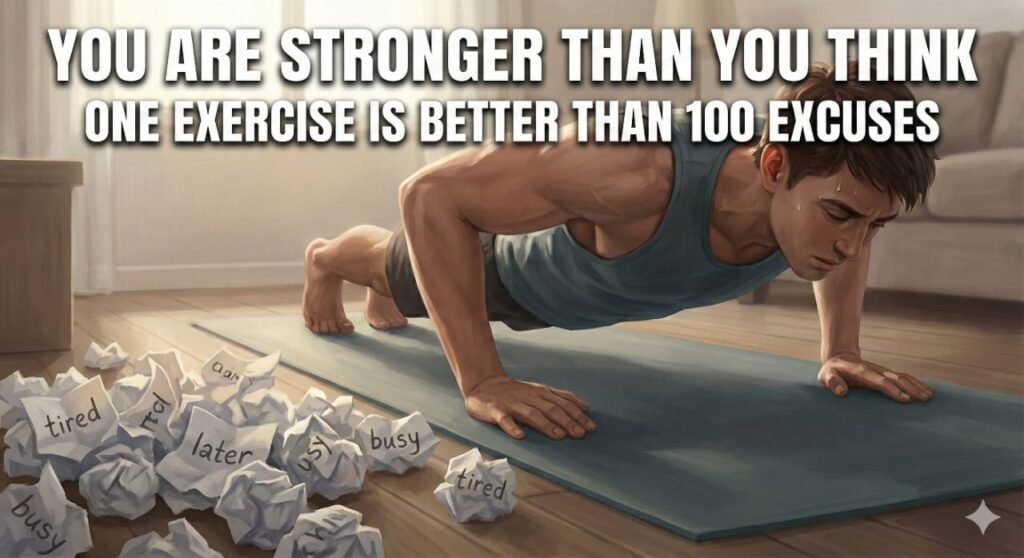
Fitness Excuse #7: “I’ll start working out when I lose weight”
What Science Says:
- Exercise is one of the most effective tools for weight management – not something to postpone ₍₁₅₎.
- Physical activity boosts metabolism, preserves lean muscle mass, and improves insulin sensitivity ₍₁₆₎.
- Combining exercise with dietary changes leads to greater long‑term success than dieting alone ₍₁₇₎.
- Waiting to lose weight before exercising often delays progress and makes it harder to maintain results ₍₁₈₎.
My Take:
This excuse flips the logic upside down. Exercise isn’t something you do after losing weight — it’s one of the key drivers that helps you lose it in the first place. At 50+, I’ve seen how consistent training not only manages weight but also builds strength, mobility, and energy. Regular running and consistent training helped me reach my ideal body weight – and yes, I sport 8‑pack abs as proof 😊.
If you’re starting out, don’t think of workouts as punishment or something reserved for “fit” people. Begin with simple, enjoyable movements — walking, bodyweight exercises, or light strength training. These build momentum, improve mood, and make it easier to adopt a healthy lifestyle.
💡 “If workouts were only for people who already lost weight, gyms would be empty – and science agrees.”
Fitness Excuse #8: “Obesity runs in our family”
What Science Says:
- Genetics can influence body type and metabolism, but they don’t predetermine obesity ₍₁₉₎.
- Shared family habits – diet, activity, sleep, stress – explain most obesity patterns across generations ₍₂₀₎.
- Lifestyle changes like balanced nutrition and regular exercise can override genetic predispositions ₍₂₁₎.
- Even those with a strong family history of obesity can achieve healthy weight through consistent choices ₍₂₂₎.
My Take:
Blaming genetics is often a way of surrendering before the fight begins. While family history may set the stage, it doesn’t dictate the outcome. At 50+, I’ve seen firsthand how consistent training, mindful eating, and daily movement can transform health, regardless of family background. You cannot follow the same diet and lifestyle choices that led to obesity in your family and expect a different result. Change the inputs, and you’ll change the outcome.
If obesity runs in your family, that’s even more reason to break the cycle. Start small: swap processed foods for whole ones, add short bursts of activity into your day, and prioritize sleep. These changes compound over time and can shift the trajectory for you – and for future generations.
💡 “Obesity may run in your family – but the real problem is nobody else does. And science agrees.”
Fitness Excuse #9: “I don’t want to sweat”
What Science Says:
- Sweating is your body’s natural cooling mechanism – not a sign of danger ₍₂₃₎.
- Sweat levels depend on genetics, hydration, environment, and fitness level – not just effort ₍₂₄₎.
- Exercise benefits occur whether you sweat a little or a lot ₍₂₅₎.
- Low‑sweat activities like yoga, Pilates, walking, or swimming still deliver powerful health improvements ₍₂₆₎.
My Take:
Sweat is often misunderstood as something to avoid, when in reality it’s just your body’s way of keeping you cool. At 50+, I’ve learned that sweat is not the enemy – it’s a proof your body is working, adapting, and protecting itself. Personally, I love to sweat it out because the bliss you feel when sweat flows freely is something out of this world. It even benefits your skin by opening pores and flushing out toxins.
If you dislike sweating, choose activities that minimize it: early morning walks, swimming, cycling in cooler weather, or indoor strength training with fans. The point isn’t how much you sweat, but how consistently you move.
💡 “If sweat were truly the enemy, athletes would quit after warm‑ups – but science says otherwise.”
Fitness Excuse #10: “I don’t need workouts because my job gives me enough movement”
What Science Says:
- Occupational activity (standing, lifting, walking) is not the same as structured exercise ₍₂₇₎.
- Work movement often lacks the intensity, variety, and progression needed for fitness ₍₂₈₎.
- Repetitive tasks can increase risk of injury, strain, or imbalance ₍₂₉₎.
- Structured workouts provide balanced training, targeted strength, and recovery benefits ₍₃₀₎.
My Take:
It’s easy to confuse being busy or physically active at work with true fitness. At 50+, I’ve learned that while work may keep you moving, it rarely challenges your body in the ways that build strength, endurance, and resilience. Work activity is often repetitive, one‑sided, and stressful – whereas workouts are intentional, balanced, and restorative.
If your job keeps you on your feet, that’s great – but it’s not enough. Add short, focused sessions that strengthen weak areas, improve posture, and build stamina. Even 20 minutes of structured training can transform how you feel at work and beyond.
💡 “If work alone built fitness, construction supervisors would never need gyms – but science says otherwise.”
One Workout Beats a Hundred Excuses
I hope this post encourages people to put their excuses aside and embrace fitness as a way of life – to move freely and age gracefully. It is also a tribute to the thousands who have smashed so‑called boundaries and achieved remarkable feats in sports and athletics despite physical inadequacies or medical conditions.
A big salute to para-athletes, blind cricketers, senior athletes, those fighting cancer and serious health challenges, and many others who have shown us that limitations exist more in the mind than in the body. Your greatness inspires the world to adopt health and fitness as an essential part of our lifestyles. You have taught us that it is absolutely possible to achieve great things if you put your mind to it and dedicate yourself to breaking the boundaries we build around ourselves.
You Are Stronger Than You Think.
Ready to turn your ideas into science‑backed, engaging blog posts that readers love?
 Chat on WhatsApp
✍️ Explore Our Blog Writing Services
Chat on WhatsApp
✍️ Explore Our Blog Writing Services
Fitness excuses don’t stand up to science. Here are the research studies, expert articles, and trusted sources behind each take – dive in whenever you’re ready.
References
References for Excuses 1–3
₍₁₎ Harvard Health – Timing and consistency…
₍₂₎ Psychology Today – Tips to start…
₍₃₎ WHO – Physical activity guidelines
₍₄₎ BMJ – WHO 2020 Guidelines…
₍₅₎ Frontiers in Nutrition – Protein intake…
₍₆₎ AJCN – Protein intake and kidney…
₍₇₎ Osteoarthritis Journal – Running and joint…
₍₈₎ U.S. News – Best exercises for older adults
References for Excuses 4–6
₍₁₁₎ StrengthLog – Strength training myths for women
₍₁₂₎ NSCA – Women and heavy weights myth
₍₁₃₎ EditVerse – Testosterone science behind the bulky myth
₍₁₄₎ Lancet EBioMedicine – Exercise and metabolism in weight loss
₍₁₅₎ Healthline – Does exercise help you lose weight?
₍₁₆₎ Buoy Health – Exercise and weight loss
₍₁₇₎ Lancet Diabetes & Endocrinology – Genetics and obesity
₍₁₈₎ Science of Biogenetics – Genetics and obesity link
₍₁₉₎ Springer – Genetic, environmental, and dietary factors in obesity
₍₂₀₎ FlowBio – Why do we sweat? The science behind sweating and exercise
References for Excuses 7–10
₍₂₁₎ MrSteam Blog – The science of sweating
₍₂₂₎ RevisionDojo – Why sweating cools the body effectively
₍₂₃₎ BJSM Blog – Occupational vs leisure physical activity
₍₂₄₎ Shirley Ryan AbilityLab – Exercise vs physical activity
₍₂₆₎ FlowBio – Why do we sweat? The science behind sweating and exercise
₍₂₇₎ MrSteam Blog – The science of sweating
₍₂₈₎ RevisionDojo – Why sweating cools the body effectively
Good one! Nady
This is the larger truth to excuses most of us sail-in (instead of 10-15 mins indulge-in for quick exercise), until hard facts of declined health status gets tabled by doctor(s).
Thanks so much Avil for reading and sharing your thoughts! You’re absolutely right – most of us drift along with excuses until the wake up call comes from a doctor’s report. That’s exactly why I wanted to highlight how even 10–15 minutes of movement can make a difference. It’s always better to start with exercises now than be forced into it later. Glad the post resonated – and it’s great to connect with you here 😊