
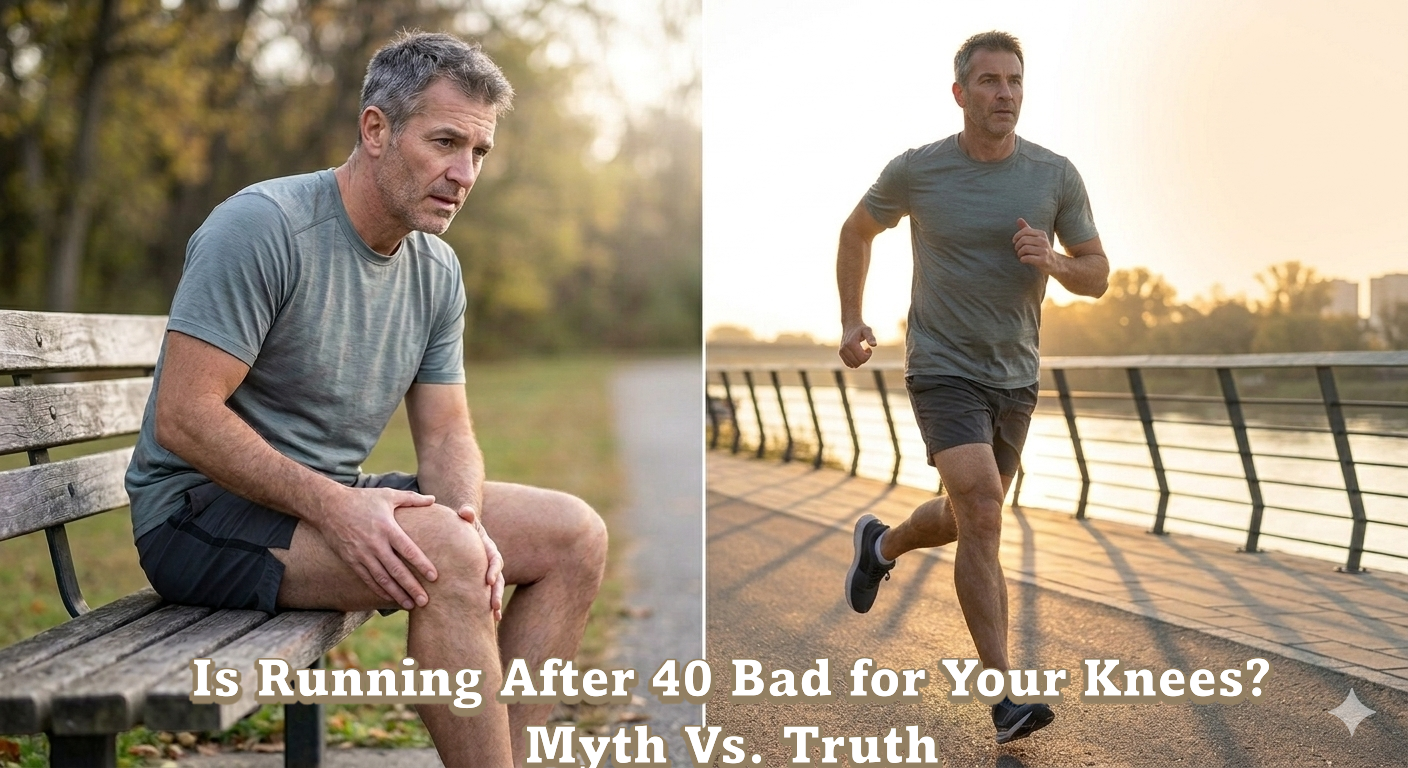
🏃♂️ Running After 40: Fear vs Reality
Running after 40 is a topic surrounded by warnings that make you doubt yourself – you’ve probably heard them so often they almost feel like medical fact. A neighbor says it, a relative repeats it, and somewhere along the way, you start believing that running is bad for your knees – especially once you cross 40.
- Stairs seem steeper.
- Morning stiffness lingers longer.
- Recovery feels slower than it used to.
And naturally, the thought creeps in: Am I doing more harm than good by running after 40?
One of the most common fears is that high‑impact exercise is “wearing out” your joints. However, the truth about whether running after 40 is bad for your knees is far more nuanced than most people realize.
Why This Fear Feels Logical
- Cartilage changes and joints feel tighter.
- Recovery slows, muscle mass declines.
- Hormonal shifts take place.
- Injuries take longer to heal.
So, the idea that years of pounding the pavement might “wear out” your knees begins to feel logical—even inevitable.
The Big Question
Is that really the truth? Does research fully support the gloomy story of knees wearing out with every mile?
What This Article Covers
- Separate myth from evidence.
- Explore what science truly says about running after 40.
- Share practical, knee‑friendly strategies to stay active without second‑guessing every step.
💡 First hint—backed by research: the real picture is far more nuanced than the simple wear‑and‑tear theory.
⚠️ The Myth: Running After 40 Wears Out Your Knees
The belief that running “wears out” your knees didn’t just appear overnight; it slowly took shape over the years. A mix of media messages, half-understood medical advice, and countless real-life stories helped cement it in people’s minds. And once an idea sounds logical, it spreads fast.
Where Does This Myth Come From?
- Anecdotes that stick: Someone’s relative runs for years, later develops knee pain, and the two factors get automatically linked. Cause and effect—even when the explanation is not that simple.
- Old “wear-and-tear” thinking: For decades, joints were compared to machine parts. Use them too much, and they supposedly break down.
- Media oversimplification: Headlines often reduce complex research into dramatic claims like “Running destroys your knees.” It grabs attention, but not accuracy.
Why It Hits Hard After 40
- Small aches become more noticeable.
- Recovery takes longer than it used to.
- There’s a growing fear of osteoarthritis, which many assume is purely caused by overuse.
So, it feels reasonable to think running is risky at this stage of life.
In other words, knees are not fragile hinges that simply wear down. They are living tissues—surprisingly adaptable, and often become stronger with the right kind of movement.
🧬 Cartilage 101: The Science Behind Your Knees
Knee cartilage is often misunderstood. Many imagine it as a cushion that simply wears out with use, but the science tells a different story.
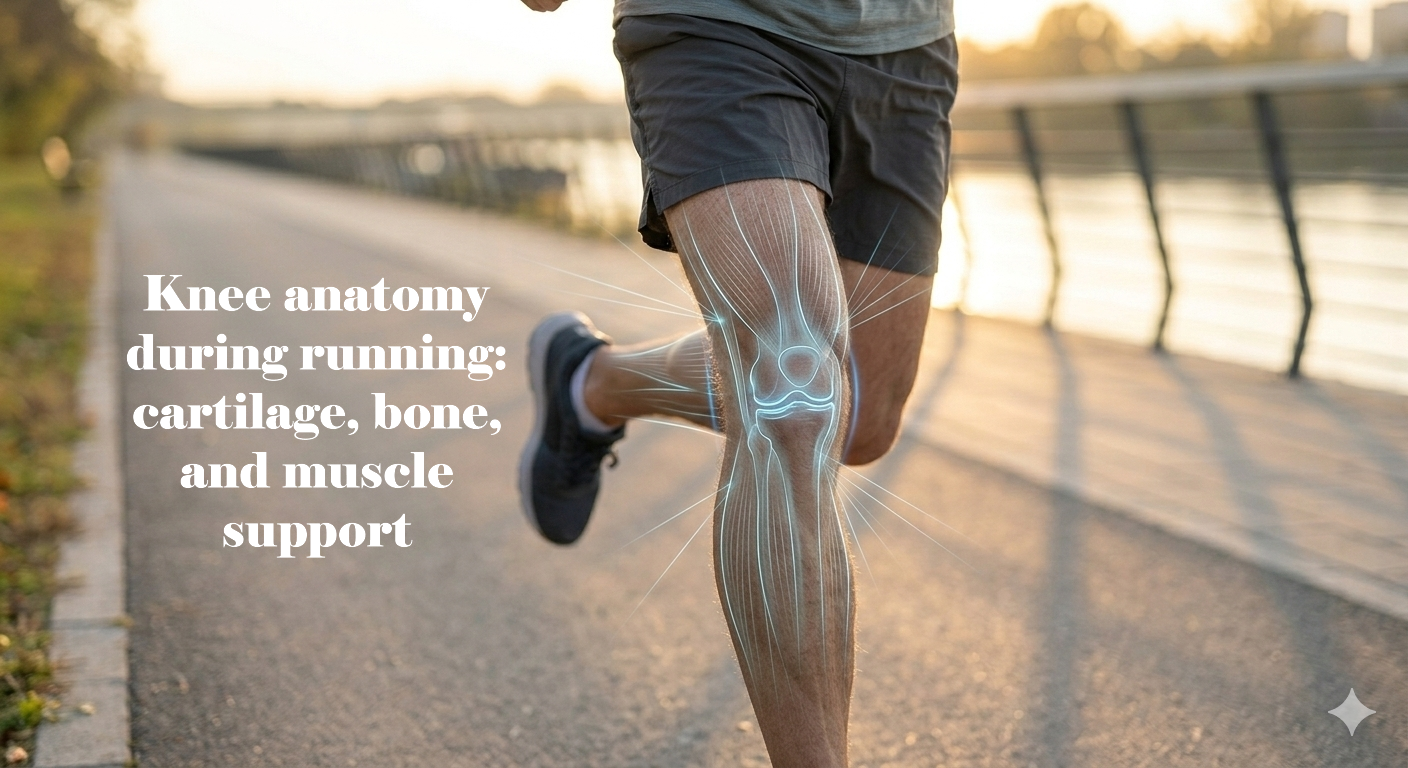
Scientific perspective on running after 40
Structure & Composition
- The knee is lined with articular cartilage, a specialized form of hyaline cartilage.
- It contains chondrocytes (cartilage cells) embedded in a dense extracellular matrix.
- The matrix is made of collagen fibers (type II), proteoglycans, and water (70–80% of cartilage volume).
- This unique design provides a smooth, low‑friction surface and distributes load across the joint.
Blood & Oxygen Supply
- Cartilage is avascular—it doesn’t have its own blood vessels.
- Oxygen and nutrients diffuse from surrounding synovial fluid during joint movement.
- Cartilage depends on regular motion to “pump” nutrients in and waste products out.
Hydration & Synovial Fluid
- Cartilage is highly hydrated, giving it natural shock‑absorbing properties.
- Each step compresses cartilage, briefly squeezing out fluid; when pressure is released, it reabsorbs fluid and nutrients.
- Without proper hydration, cartilage loses elasticity, becomes brittle, and less able to cushion impact.
Adaptability
- Cartilage is not passive—it adapts to controlled loading.
- Moderate, consistent stress stimulates chondrocytes to maintain and repair the matrix.
- Too little movement weakens cartilage, while sudden overload can damage it.
💡 Key takeaway: Cartilage thrives on balanced movement. It’s not a fragile cushion—it’s a living, adaptable tissue designed to respond to stress.
✨ The Science: What Research Says About Running After 40
So, let’s pause the rumors for a moment and look at what research actually says. Not opinions. Not gym myths. Real data from long-term studies. And honestly, the findings tend to surprise people.
The Big Question
Do runners develop more knee problems than non-runners? Research comparing these groups gives a pretty consistent answer:
- Recreational runners generally do not have higher rates of knee osteoarthritis than people who don’t run.
- Some studies even show lower arthritis risk among moderate runners compared to sedentary adults.
- Extremely high mileage, elite competition levels, or past knee injuries are far more likely to cause problems than casual running itself.
In simple terms, moving regularly appears to be a healthier choice for joints than avoiding impact altogether. Now, here’s something many people don’t realize: cartilage is not passive tissue. It is very much alive and it adapts to stimulus and loads. That’s why running after 40 isn’t automatically harmful—it’s about how you train, recover, and care for your knees.
What Happens When You Run
- Knee cartilage briefly compresses with each step.
- Then it rehydrates and rebuilds.
- Over time, this controlled loading can improve its resilience and strength.
Think of it like exercise for your joints. Too little movement can actually weaken cartilage, while gradual, consistent activity tends to support it.
The Role of Muscle Strength
Muscle strength also plays a big role. Running engages the big stabilizing muscles around the knee, including:
- Quadriceps
- Hamstrings
- Calves
Stronger muscles help absorb force, reducing stress on the joint itself. Weak support muscles, on the other hand, often increase injury risk—even in non-runners. From my personal experience, poor running form is often the real culprit—far more than running itself.
Age and Natural Changes
Age is another piece of the puzzle. After 40, natural joint changes occur regardless of activity levels. Cartilage may thin slightly, and recovery slows, but research suggests this is normal biological aging—not necessarily damage caused by running. Many adults show joint changes on scans yet remain pain-free and active for life.
The Real Takeaway
- Running is not inherently harmful to knee health.
- Moderate, well-paced running often supports joint function.
- Context matters: previous injuries, sudden mileage increases, poor strength training, and overtraining can influence risk.
- Your running form is the dynamic variable that you need to focus on.
✨ Risk Factors Related to Running After 40
Running itself is usually not the main culprit behind knee trouble after 40. What really makes a difference are the risk factors linked to age-related changes. And honestly, this is where reality gets a little messy, because no two bodies arrive at midlife with the same history.
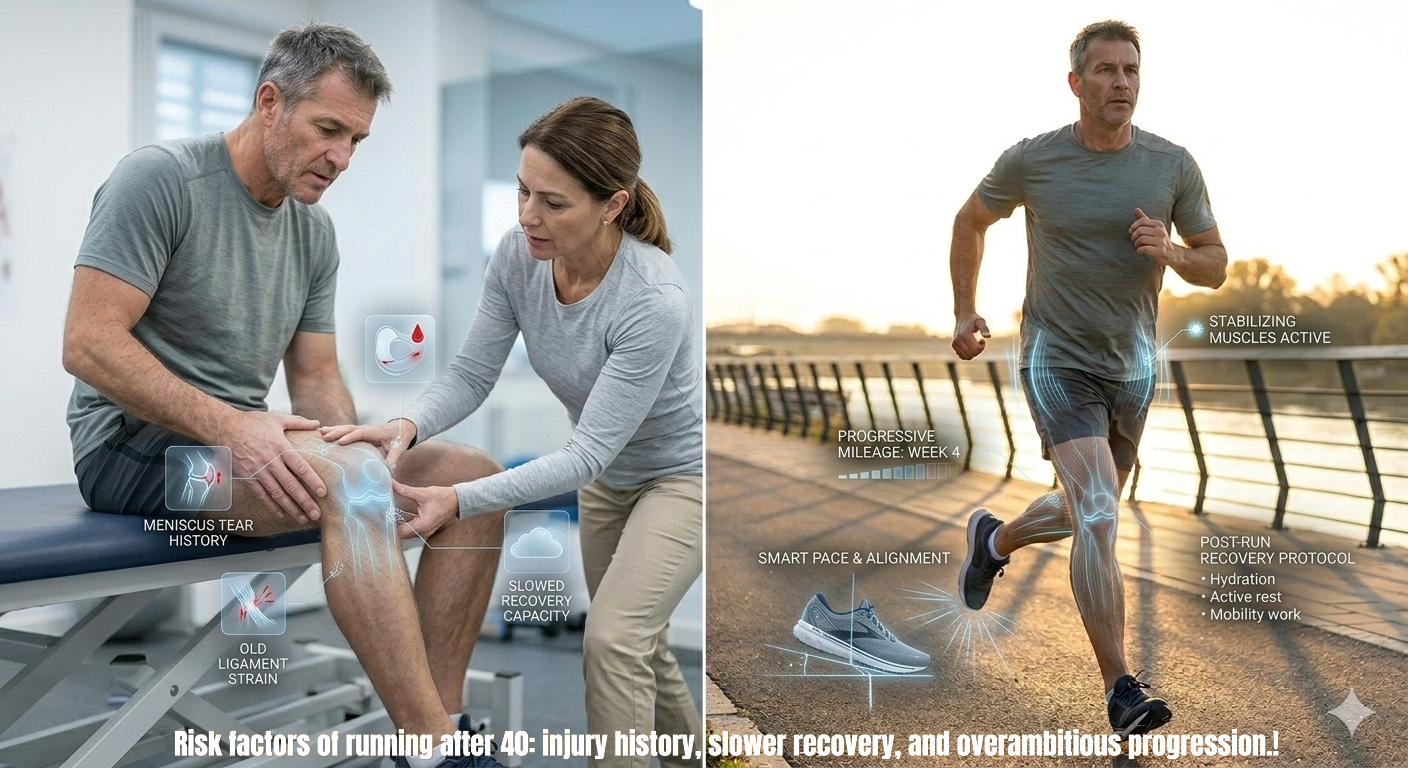
Risk factors of running after 40 – knee injury history, slower recovery capacity, and overambitious progressions.
Reduced Recovery Capacity
As we age:
- Muscles repair more slowly after bouts of stress and impact.
- Joint stiffness tends to linger longer.
- Inflammation doesn’t settle as quickly as it once did.
So, while running after 40 is still possible, and often beneficial, the body simply needs more recovery time, smarter pacing, and proper warm-ups.
Pre-Existing Injuries
Many runners over 40 carry old knee stories, such as:
- Previous meniscus tears
- Ligament strains from sports
- Early-stage arthritis or cartilage wear
If you’ve dealt with a meniscus tear before, recovery and return to running require careful planning. For a detailed guide, see how to make a comeback to running after a meniscus tear .
Research shows running does not usually cause osteoarthritis on its own, but when damage already exists, sudden increases in load can trigger symptoms or flare-ups.
Training Errors
- Increasing mileage too quickly
- Adding intense workouts without enough rest
- Running in worn-out or poorly fitted footwear
- Skipping strength and mobility work for the supporting muscles and tendons
These factors often place more strain on the knee than running itself.
Lifestyle Habits
- Excess body weight increases joint load with every step.
- Long sedentary hours weaken stabilizing muscles.
- The “weekend warrior” pattern—little movement all week, then intense activity. This approach can shock the joints.
✨ Signs You Should Reassess Running or Slow Down
Running after 40 is not automatically risky, but your knees do have a way of “speaking up” when something isn’t working. The tricky part is knowing which sensations are normal and which ones are signals to slow down and reassess.
Persistent Knee Pain
Occasional soreness after a long run is normal. But pain becomes concerning when it:
- Lingers for several days instead of fading
- Returns every time you run
- Gradually feels sharper and limits your range of motion
That usually means the joint is not tolerating the current training load very well.
Swelling or Instability
Pay attention if you notice:
- Puffiness around the knee
- Warmth or stiffness inside the joint
- A feeling that the knee might “give way” while walking
Swelling often reflects inflammation, and pushing through it rarely helps—it usually makes recovery longer and harder.
Difficulty with Everyday Activities
Running should not interfere with basic movement. If you start feeling discomfort while:
- Climbing stairs
- Sitting down or standing up
- Walking short distances
…it may indicate the knee is under excessive stress.
When to Consult a Professional
Generally, it’s wise to seek medical or physiotherapy advice if symptoms:
- Last more than a few weeks
- Continue worsening
- Begin affecting normal daily function
A proper check-up can spot hidden issues, correct training mistakes, and stop small aches from turning serious. Some soreness is normal, but ongoing pain, swelling, or stiffness means it’s time to slow down—or take a step back to reassess the condition.
✨ Safer Alternatives to Running After 40 – Practical Strategies for Protecting Your Knees
If running begins to bother your knees after 40, it doesn’t mean you need to quit being active. Usually, it just calls for a few smart adjustments. Many people actually feel better when they mix things up.
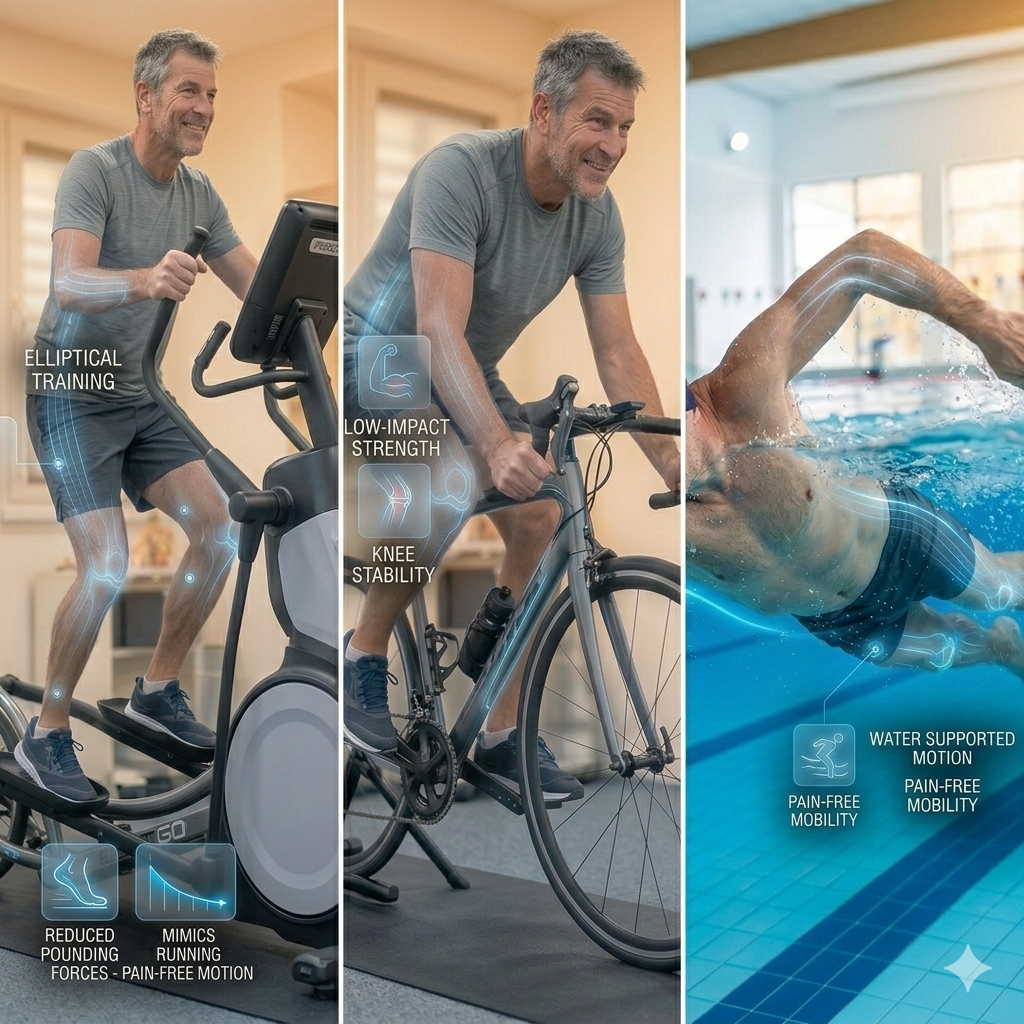
Safer alternatives to running after 40
Low-Impact Cardio Options
- Cycling – builds leg strength while keeping knee impact low.
- Swimming – water supports body weight, allowing smooth, pain-free movement. Reminder: poor swimming technique can still lead to injury, so form matters.
- Elliptical training – mimics running motion but reduces pounding forces.
If running bothers your knees after 40, don’t panic. A few smart changes and low-impact cardio can keep you active comfortably.
Strengthening Work
- Quadriceps and hamstrings for stability
- Hip muscles to improve alignment and mobility
- Core strength to support overall movement mechanics
Stronger support muscles mean less stress directly on the knee.
Mobility & Flexibility
Simple habits like stretching, yoga, or foam rolling can:
- Improve joint range of motion
- Reduce stiffness after exercise
- Enhance movement efficiency during running
Even short daily sessions can make noticeable differences over time.
Smart Running Adjustments
- Mileage – increase gradually instead of making sudden jumps.
- Terrain – softer surfaces like trails or tracks reduce impact.
- Footwear – well-fitted shoes with proper cushioning provide better support.
Training Technology
Modern tools can help you train smarter:
- Heart rate monitors
- Running apps
- Recovery trackers
These allow you to monitor intensity and avoid overtraining.
✨ Practical Tips for Runners Over 40
Running after 40 is not about chasing personal records every weekend. It’s about staying consistent, protecting your knees, and actually enjoying the process. A few practical habits go a long way.
Warm‑Up & Cool‑Down Essentials
This part matters more now than it used to. Instead of jumping straight into your pace:
- Begin with 5 to 10 minutes of brisk walking or light jogging
- Add dynamic movements like leg swings or controlled lunges
- Gradually increase speed rather than sprinting off the line
After your run, resist the urge to just stop and sit. Cool down properly:
- Slow your pace for several minutes
- Walk briefly to let your heart rate settle
- Stretch gently, especially the thighs and calves
Strengthening Key Muscles
These muscle groups stabilize the knee and absorb impact. A simple weekly routine can include:
- Squats or sit‑to‑stands
- Lunges
- Step‑ups
- Glute bridges
- Hamstring curls
Stronger hips and thighs reduce strain on the knee joint and improve running mechanics.
Post‑Run Recovery
Think of it as active maintenance:
- Prioritize quality sleep for tissue repair
- Maintain balanced nutrition, including adequate proteins and hydration
- Use active rest days for walking, cycling, or swimming—instead of total inactivity
Listen to Your Body
- Mild soreness after a run is normal
- Persistent pain, swelling, or stiffness that doesn’t fade is not
Adjust early rather than pushing through discomfort.
Focus on Running Form
As your body changes with age, your stride should adapt too. Paying attention to form can dramatically reduce knee stress and improve efficiency:
- Work on landing softly on your feet rather than pounding the ground
- Avoid over‑bending your knees—keep movements controlled and natural
- Engage your upper body for balance and rhythm, not just your legs
- Pay attention to the timing of oscillations (the natural up‑and‑down motion) to keep stride smooth and efficient
Small adjustments in form often make the biggest difference in comfort and long‑term knee health.
✨ Conclusion
So, is running after 40 quietly wrecking your knees? The evidence says no—not in the way many people fear. The long‑standing belief that running automatically leads to knee osteoarthritis doesn’t really hold up under scientific scrutiny. Study after study points in a different direction: moderate, recreational running is not inherently harmful to knee health. In some cases, doing nothing at all may actually be worse.
What tends to cause trouble is not the act of running itself. It’s the surrounding habits—rapid mileage increases, skipping strength training, ignoring recovery, poor running form, and pushing through persistent pain because you feel “it will pass.” Those patterns create strain, not the steady rhythm of sensible running.
Knees are not fragile mechanical parts that simply wear down with use. They are living joints. They adapt. They respond to gradual loading, muscle support, and consistent care.
And here’s the encouraging part: most of those factors are within your control. With thoughtful adjustments, proper strengthening, smart recovery, and attention to warning signs, running after 40 can still feel strong, freeing, and even joyful.
❓ Frequently Asked Questions About Running After 40
Does running after 40 damage your knees?
No. Research consistently shows that moderate, recreational running does not increase the risk of knee osteoarthritis compared to non‑runners. In fact, some studies suggest runners may have healthier knees than sedentary adults. The real risks come from poor training habits, sudden mileage jumps, or ignoring recovery—not from running itself.
Why do my knees feel sore after running?
Mild soreness is normal, especially after longer runs or new workouts. It usually reflects temporary stress on muscles and cartilage. Pain becomes concerning if it lingers for several days, returns every time you run, or grows sharper over time. That’s when it’s wise to reassess your training load or consult a professional.
Does knee cartilage have a blood supply?
No. Knee cartilage is avascular, meaning it doesn’t have its own blood vessels. Instead, it absorbs oxygen and nutrients from synovial fluid, which circulates during movement. This is why regular activity is important—motion helps “pump” nutrients in and waste products out.
Can hydration affect knee health?
Yes. Cartilage is made up of 70–80% water, which gives it shock‑absorbing properties. When dehydrated, cartilage loses elasticity and becomes less effective at cushioning impact. Staying hydrated and maintaining regular movement helps cartilage stay resilient.
What are safer alternatives if running hurts my knees?
Low‑impact cardio options like cycling, swimming, or elliptical training can keep you active while reducing joint strain. Strengthening the quads, hamstrings, hips, and core also helps stabilize the knee and absorb impact.
How can I protect my knees while running after 40?
Warm up properly, increase mileage gradually, wear well‑fitted shoes, and prioritize recovery. Listening to your body is key—persistent pain, swelling, or stiffness should never be ignored.
📚 References & Further Reading
Clinical & Research Articles
Professional & Guideline Sources
Want professional content writing services to turn your topic ideas into engaging blog posts that your target readers love?
 Chat With Nady on WhatsApp
✍️ Explore Our Blog Writing Services
Chat With Nady on WhatsApp
✍️ Explore Our Blog Writing Services