
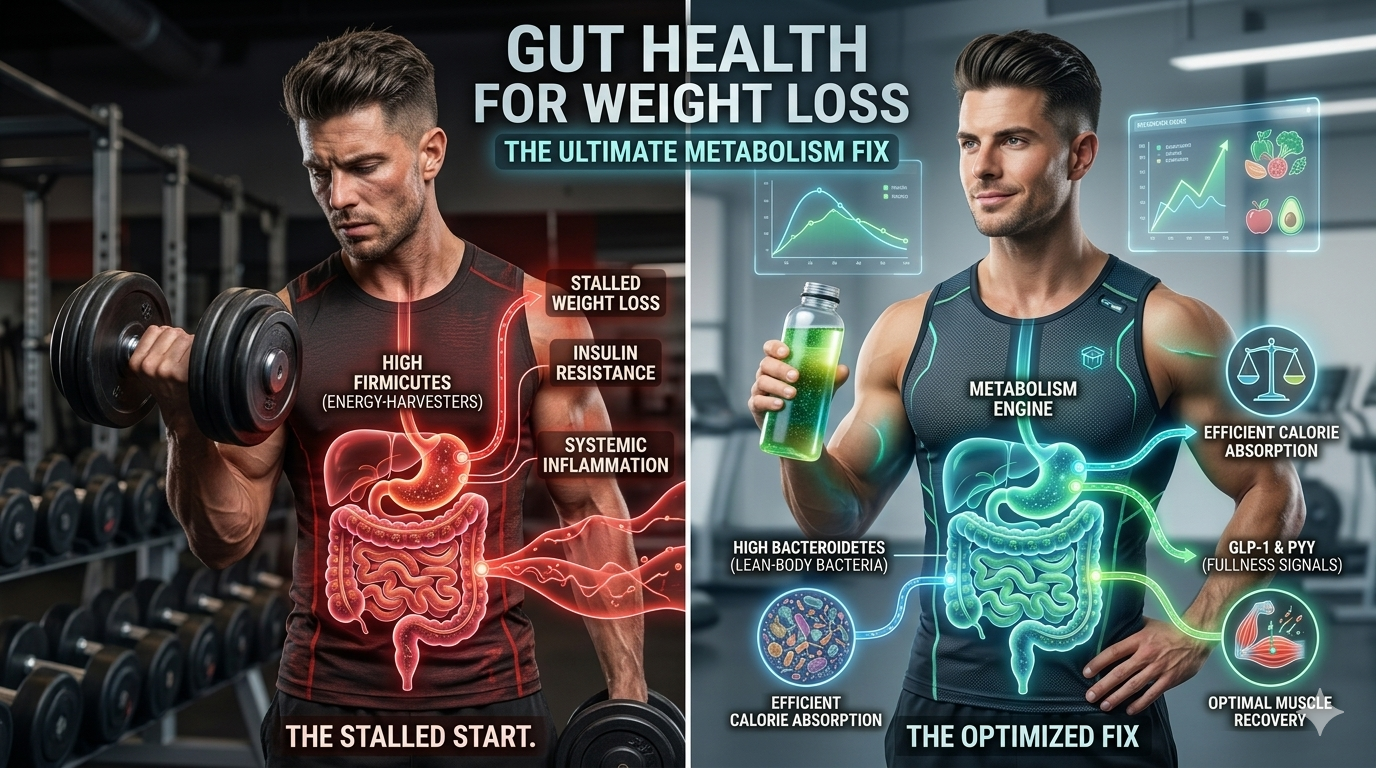
Weight loss is not a simple math equation where you burn more calories than what you consume – it’s a biological negotiation. Have you overlooked the importance of gut health for weight loss success? Let’s find out why you shouldn’t.
Executive Summary: The "Fast Track" to Gut Health
You’re in a calorie deficit and training hard, but the scale hasn't moved. The culprit isn't your effort—it's likely metabolic inefficiency caused by gut dysbiosis.
Your microbiome dictates how many calories you actually absorb and how your body signals "hunger" vs. "fullness" through hormones like GLP-1 and Insulin.
If you experience afternoon bloating, sugar cravings, or slow recovery, your gut is likely working against your weight loss goals.
By pairing specific Probiotics (bacteria) and Prebiotics (fuel), you can shift your ecosystem to favor fat-burning over storage.
The Timeline: Real biological change takes 2-4 weeks. Consistency in your gut-health habits is just as important as consistency in the gym.
Why Am I Not Losing Weight Even With Workouts? (The Gut Health Connection)
Many people who hit the gym or workout regularly do not see the desired results, even after staying consistent for six months or more. You’ve likely been told the same "golden rule" over and over: create a calorie deficit.
The logic seems simple — intake fewer calories than you consume every day, and the weight should fall off. You’ve tracked your macros, weighed your portions, and sacrificed your favorite treats, yet weight loss still feels like a distant, blurry dream. You’re doing the work, but your body isn't reflecting the effort. What could be wrong?
“Stuck at 192.8 lbs? Your gut might be the hidden hand holding the scale steady.”
The missing link may not be your food intake or your training volume, but rather the biological efficiency with which your food is processed. If your internal "engine" isn't tuned correctly, those high-quality macros you’re eating might be going to waste — or worse, triggering inflammation that stalls your progress.
The Anatomy of Your Gut: More Than Just a Digestive Tube
To understand the importance of gut health for weight loss, we have to look at the three main organs constituting the "gut" and their specific roles in your fitness journey:
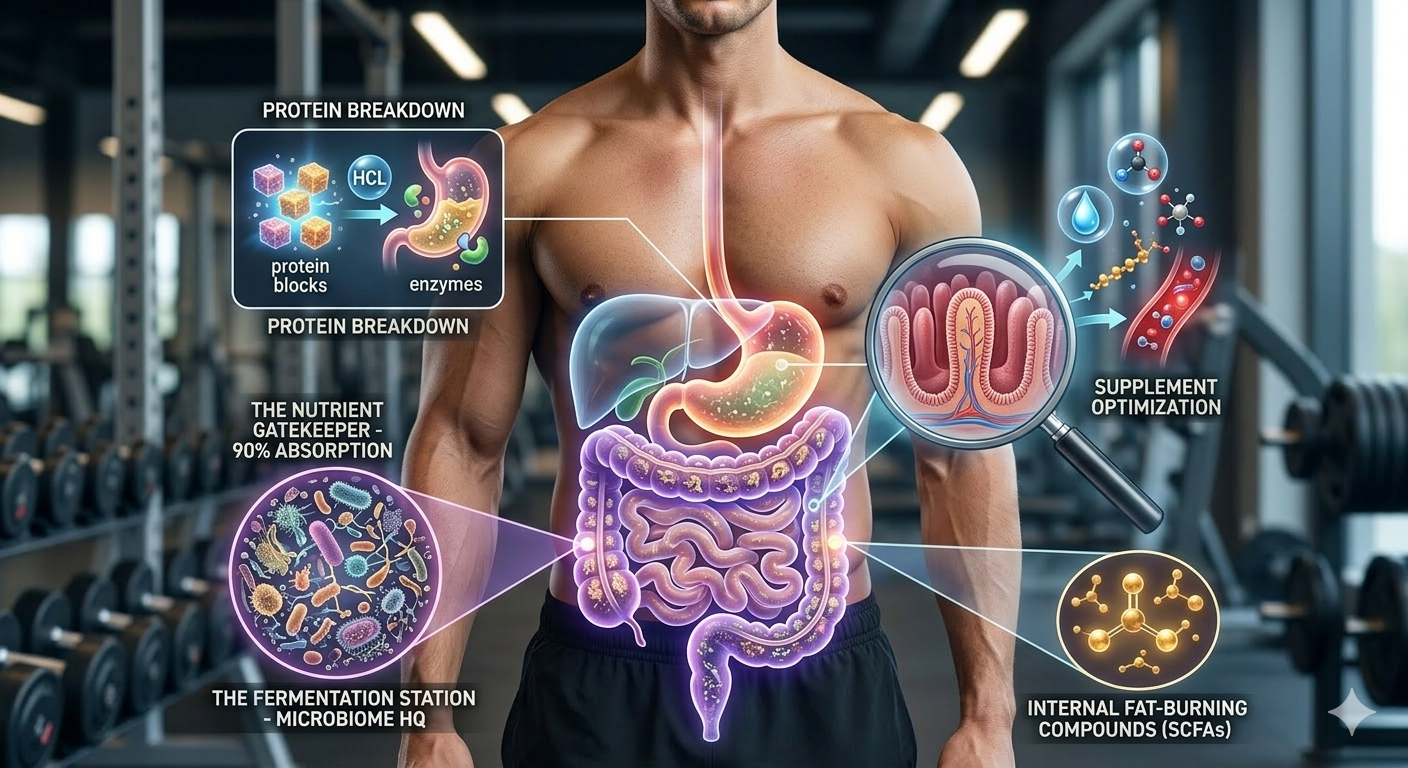
“Your gut isn’t just digestion—it’s the engine that powers nutrient absorption, recovery, and fat‑burning.”
The Stomach: This is where the heavy lifting starts. It uses hydrochloric acid and enzymes to begin breaking down protein - essential for those of us hitting the weights.
The Small Intestine: The "Nutrient Gatekeeper." About 20 feet long, it is responsible for 90% of your nutrient absorption. This is where your body pulls in the proteins, fats, and carbs you eat to fuel your workouts and repair tissue.
The Large Intestine (The Colon): The "Microbiome Headquarters." This 5-foot tube is where trillions of bacteria live. It acts as the final processing plant for everything your body couldn't digest earlier.
The Small Intestine: The Nutrient Gatekeeper
If the lining of your small intestine is inflamed (often called "Leaky Gut"), you won't absorb nutrients efficiently.
The Fitness Impact: You could be buying the most expensive, high-quality protein powder on the market, but if your small intestine is compromised, those amino acids aren't reaching your muscles. Poor gut health essentially "wastes" your expensive supplements.
The Large Intestine: The Fermentation Station
This is where bacteria ferment fibers (prebiotics). This process creates Short-Chain Fatty Acids (SCFAs) like butyrate.
The Weight Loss Secret: SCFAs are incredible for fat loss. They help regulate your appetite and improve how your body burns fat. If your large intestine is sluggish or lacks bacterial diversity, you miss out on these natural, internal fat-burning compounds.
The Science: How Your Microbiome Dictates Your Metabolism
Your gut is home to trillions of microorganisms - bacteria, fungi, and viruses - collectively known as the microbiome. Think of it as a high-tech sorting facility that actively signals to your brain, influences your hormones, and determines how much energy (calories) you actually harvest from your food.
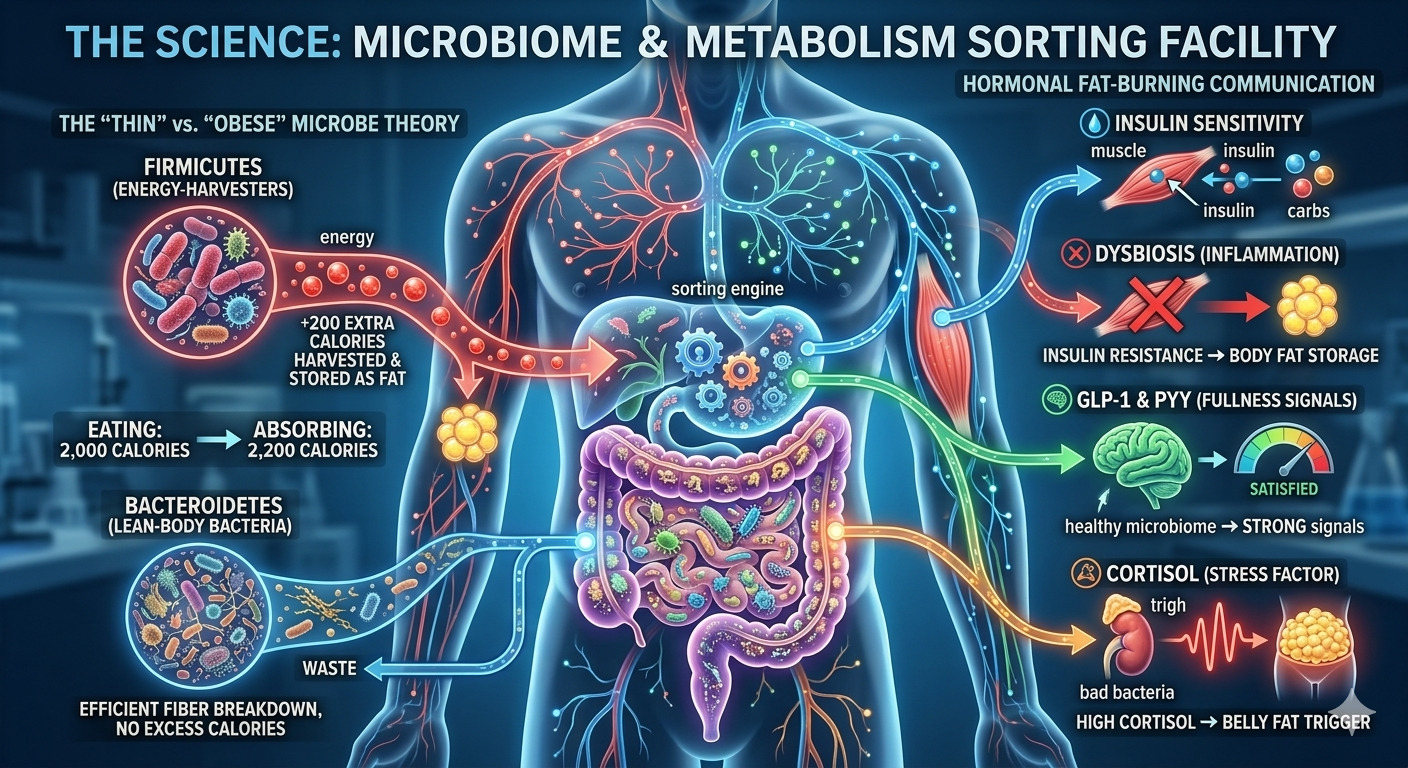
“Your gut bacteria decide whether calories fuel your muscles—or get stored as fat.”
The "Thin" vs. "Obese" Microbe Theory
Research has shown that your bacterial composition can be a better predictor of weight than caloric intake alone. A landmark study found that people struggling with weight often have a higher ratio of Firmicutes to Bacteroidetes.
Firmicutes (The Energy-Harvesters): These are incredibly efficient at breaking down molecules your body otherwise couldn't digest. This sounds good, but it means they pull extra calories out of your food and hand them over to your body to be stored as fat.
Bacteroidetes (The Lean-Body Bacteria): These are associated with leaner individuals. They focus on breaking down complex fibers without contributing to excess calorie absorption.
The Metabolic Math: If your gut is dominated by Firmicutes, you could be eating a 2,000-calorie diet but biologically "absorbing" 2,200 calories. This is why you must improve gut health to physically change the way your body calculates energy.
Gut Health for Weight Loss - How it Influences Your "Fat-Burning" Hormones
It’s not just about calories; it’s about communication. Your gut produces several hormones that tell your body whether to burn fat or store it:
Systemic inflammation from gut dysbiosis doesn’t just impact your metabolism; it can actually "stiffen" your connective tissues. For a complete recovery, pair your internal gut work with fascia training for body balance to unlock hidden power and improve overall mobility.
5 Signs Your Gut is Sabotaging Your Weight Loss Results
If you’ve been stuck at a plateau, your body might be trying to tell you that its internal ecosystem is out of balance. Here is how to translate those signals:
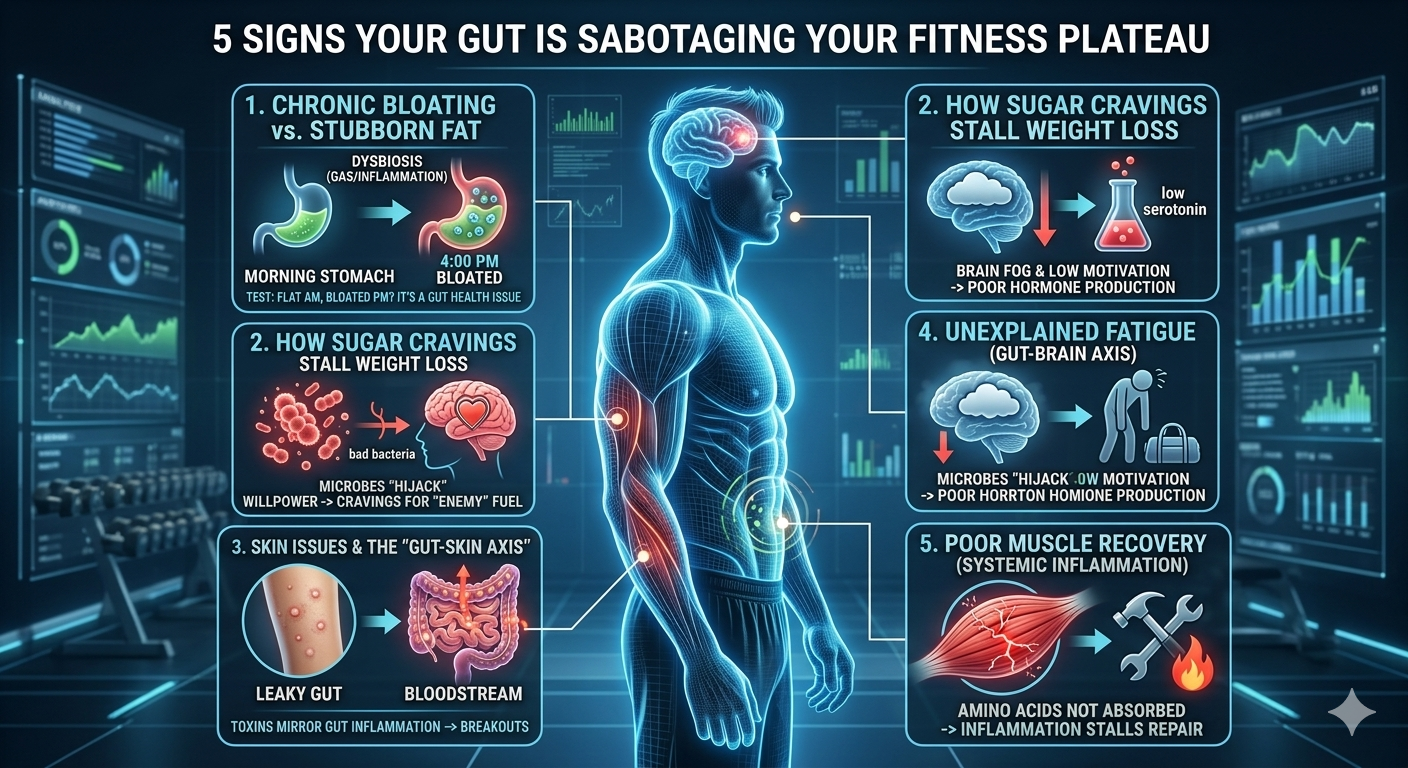
“If your stomach is flat in the morning but bloated by 4 PM, it isn't fat—it's your gut signaling for help.”
Chronic Bloating vs. Stubborn Fat
Many people talk to me about their frustration with "lower belly fat" that won't go away despite endless crunches. Often, what looks like stubborn fat is actually distension caused by trapped gas and low-grade inflammation in the small and large intestines.
When your gut bacteria are out of balance (a condition called dysbiosis), they ferment food too early or too slowly, creating gas that stretches the abdominal wall.
The Fitness Test: If your stomach is relatively flat in the morning but looks "six months pregnant" by 4:00 PM, you aren't gaining fat throughout the day - you are experiencing a gut health issue. To improve gut health, you need to identify which foods are triggering this inflammatory response.
How Sugar Cravings Stall Gut Health for Weight Loss
Do you ever feel like your cravings for chocolate or bread are "uncontrollable"? It might not be a lack of willpower. Research suggests that certain "bad" bacteria and yeast (like Candida) survive on sugar.
These microbes can actually influence your "vagus nerve" — the direct line between your gut and your brain — to signal for the specific fuel they need to grow. Essentially, these microbes "hijack" your brain's reward system.
When you eat sugar to satisfy the craving, you are literally feeding the "enemy" bacteria. Feeding these bad bacteria with sugar creates a cycle that stalls your progress, proving that mastering gut health for weight loss is about more than just willpower - it’s about microbial management.
Skin Issues & The "Gut-Skin Axis"
Your skin is often a mirror of what is happening in your large intestine. Conditions like acne, rosacea, or eczema are frequently linked to "leaky gut" (increased intestinal permeability).
When the gut lining is compromised, toxins escape into the bloodstream.
Your body tries to expel these toxins through your largest organ: your skin. If you’re noticing breakouts despite a clean diet, your gut might be struggling to filter out metabolic waste.
Unexplained Fatigue and the "Gut-Brain Axis"
As we mentioned, 95% of your serotonin is produced in the gut. If your microbiome is in shambles, your production of "feel-good" hormones drops. This leads to:
Brain Fog: Feeling "cluttered" or unfocused during your morning workout.
Low Motivation: That "I just can't get to the gym" feeling is often a result of low neurotransmitter production in a sluggish gut.
The Impact of Poor Digestion on Muscle Recovery
For the fitness community, this is the most critical sign. You grow muscle in the kitchen and during sleep, not just in the gym. If your small intestine isn't efficiently absorbing amino acids from your protein intake, your muscles won't repair themselves quickly.
Furthermore, an unhealthy gut creates systemic inflammation, meaning your body is too busy fighting internal "fires" to focus on repairing the micro-tears in your muscle fibers from your heavy workout session.
The "Second Brain": How to Improve Gut Health for Better Workout Motivation
Have you ever wondered why you feel "gut-wrenching" anxiety or have a "gut feeling" about a decision? It’s because your digestive system is lined with over 100 million nerve cells - so many that scientists call it the "second brain." This connection, known as the gut-brain axis, is the invisible string pulling the levers on your workout motivation.
Serotonin and Emotional Eating
While we think of happiness as a "head" issue, roughly 95% of your body's serotonin - the neurotransmitter responsible for mood stability and sleep - is produced in your gut. When your microbiome is balanced, your mood remains steady. When it’s not, you experience "lows" that often lead to emotional eating and sugar binging. By prioritizing gut health for weight loss, you aren't just fixing your digestion; you’re stabilizing your mind against cravings.
The "Wall" Effect: Gut-Driven Brain Fog
We’ve all had those mornings where the 6:00 AM alarm feels like an impossible hurdle. Often, that "wall" isn't laziness - it's gut-driven brain fog. Inflammation in the large intestine sends distress signals to the brain, clouding your focus and draining your willpower. If your gut is sluggish, your drive to train will be too.
Actionable Tip: To improve gut health, you must address your stress levels. High cortisol (the stress hormone) acts like an acid to your gut lining. Try 5 minutes of focused breathing before your largest meal to shift your body from "fight or flight" to "rest and digest."
The Bloat-Busting Superfood List for a Flatter Stomach 🥗
Sometimes, the weighing scale isn't moving downward because of water retention and digestive backup. Incorporating these five "functional foods" will help you improve gut health and reveal the muscle definition you’ve been working so hard for.
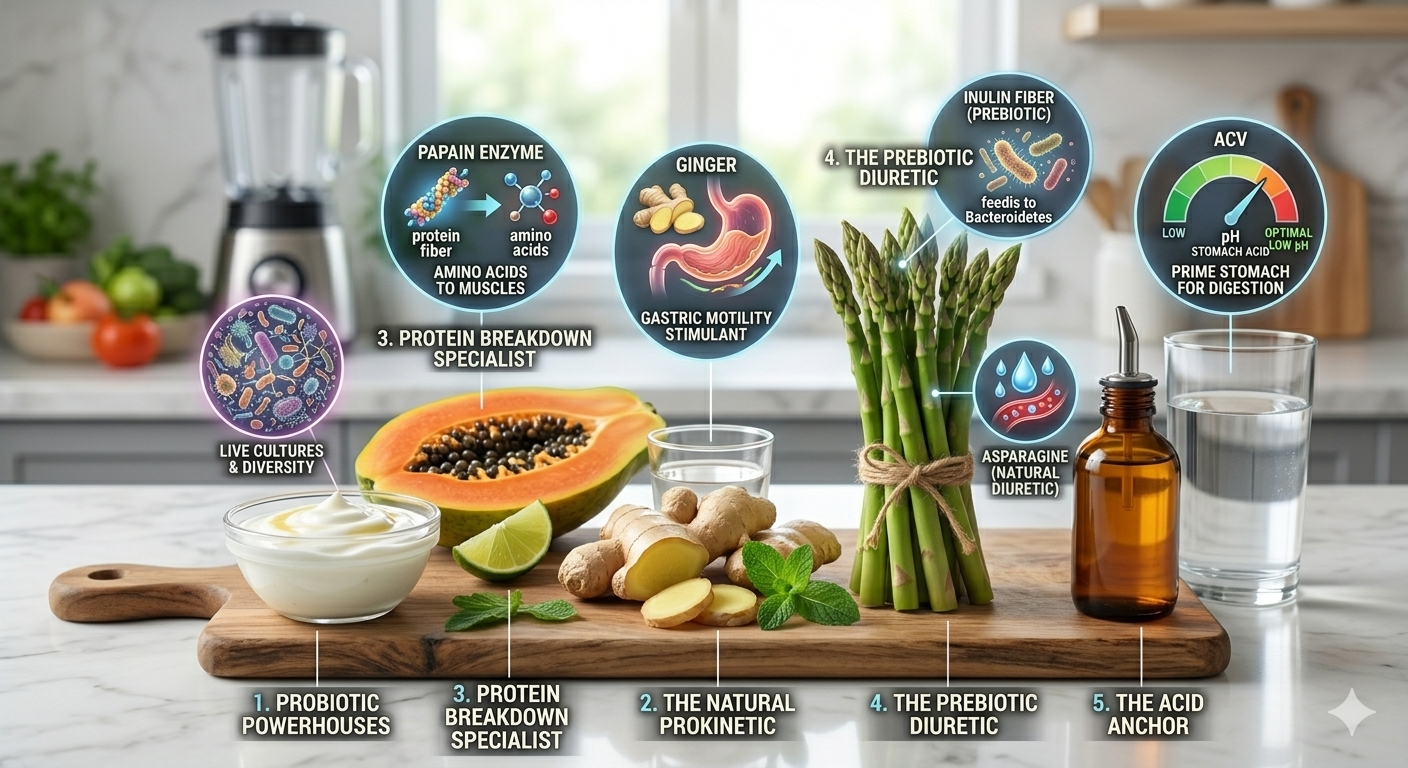
“Real results start with functional fuel that supports your microbiome.”
Kefir and Greek Yogurt (Probiotic Powerhouses)
To increase microbial diversity, you need live cultures. Kefir and Greek yogurt are packed with probiotics that act as "friendly reinforcements" for your microbiome. For those focusing on gut health for weight loss, these are dual-purpose foods: they provide the high-quality protein needed for muscle repair while populating your large intestine with bacteria that help regulate appetite. 🥛
Ginger (The Natural Prokinetic)
If you feel "heavy" or full hours after eating, your gastric motility might be slow. Ginger is a powerful prokinetic, meaning it helps stimulate the muscles in your digestive tract to keep things moving. By preventing food from sitting too long in the small intestine, ginger reduces the fermentation that leads to painful, mid-day bloating. 🫚
Papaya (The Protein Breakdown Specialist)
As a person who does regular workouts, you likely consume a high-protein diet. However, protein is tough to break down. Papaya contains a unique enzyme called papain. This natural digestive aid helps your body dismantle tough protein fibers into absorbable amino acids, ensuring your "macros" actually go to your muscles rather than causing gas and discomfort. 🥭
Asparagus (The Prebiotic Diuretic)
Asparagus is a "two-for-one" win for your gut. It is rich in inulin, a prebiotic fiber that feeds the "lean-body" bacteria (Bacteroidetes) in your colon. Additionally, it contains asparagine, a natural amino acid that acts as a mild diuretic, helping your body flush out excess salt and water weight for a tighter look. 🎋
Apple Cider Vinegar (The Acid Anchor)
Optimal digestion starts with stomach acid. Taking a tablespoon of Apple Cider Vinegar (ACV) in water before a meal can help prime your stomach for digestion. By supporting a low pH environment, ACV ensures that the "engine" of your gut is acidic enough to kill off bad bacteria and properly activate digestive enzymes. 🍎
Pro-Tip: When choosing Kefir or Yogurt, always opt for "Plain" versions. Most flavored varieties are loaded with added sugars that can feed the "bad" bacteria we are trying to crowd out!
The Prebiotic vs. Probiotic Guide: A Cheat Sheet for Success 📋
If you want to improve gut health, you need to understand the relationship between these two "P's." Think of your gut like a garden: Probiotics are the seeds you plant (the living bacteria), and Prebiotics are the fertilizer (the fiber) that helps those seeds grow. 🌱
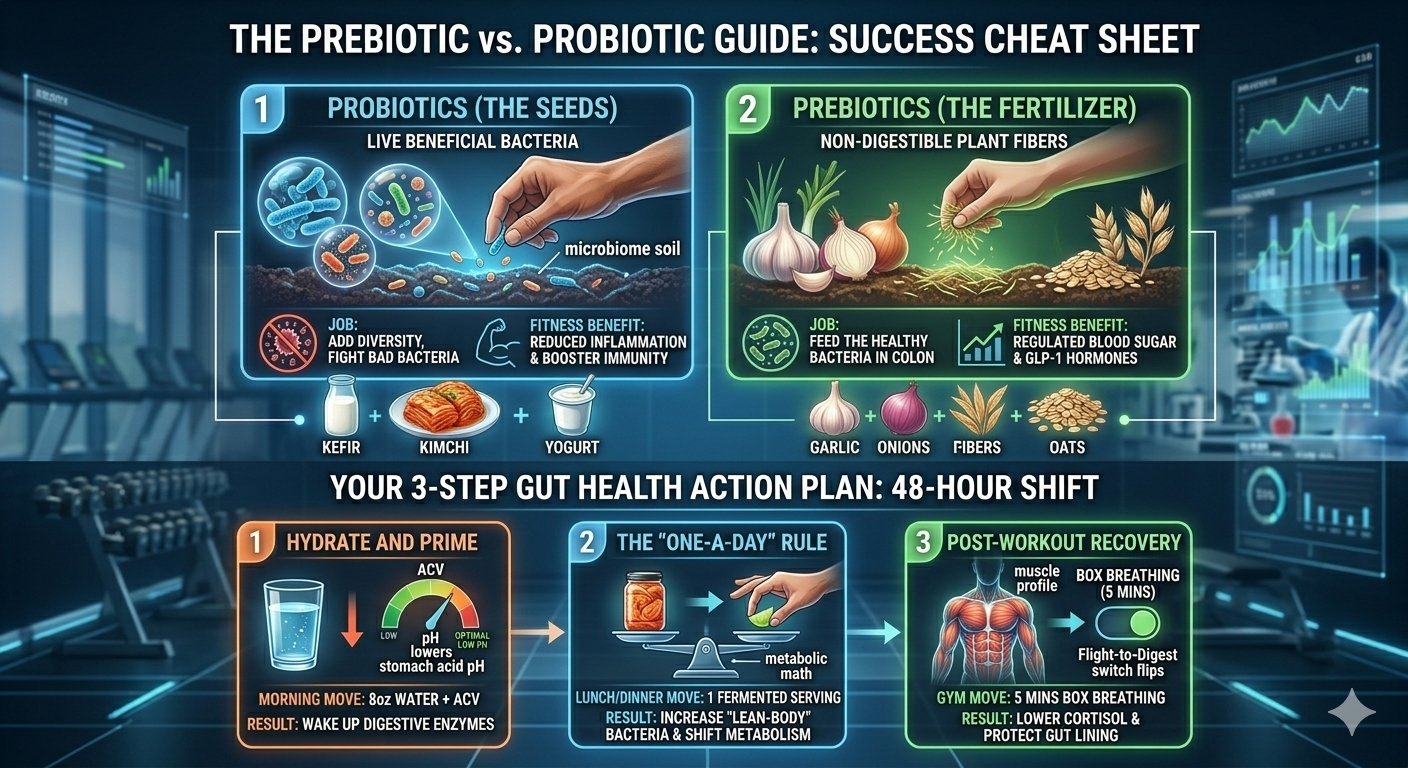
“Stop just planting seeds—start fertilizing your microbiome for real fat-loss results.”
Probiotics (The "Seeds")
What they are: Live, beneficial bacteria.
Their Job: Add diversity to your microbiome and fight off "bad" bacteria.
Fitness Benefit: Reduces systemic inflammation and boosts immunity.
Found In: Kefir, Kimchi, Sauerkraut, Greek Yogurt.
Prebiotics (The "Fertilizer")
What they are: Non-digestible plant fibers.
Their Job: To feed the healthy bacteria already living in your colon.
Fitness Benefit: Regulates blood sugar and increases fullness (GLP-1).
Found In: Garlic, Onions, Bananas, Oats.
Your 3-Step Gut Health Action Plan 🚀
Transforming your internal "engine" doesn't happen overnight, but you can start shifting the needle in as little as 48 hours. Use these three steps to ensure your gut health for weight loss strategy is airtight.
1. Hydrate and Prime: Start your morning with 8oz of water and a splash of Apple Cider Vinegar. The Result: This "wakes up" your digestive enzymes for the day’s protein intake.
2. The "One-a-Day" Rule: Add one serving of a fermented food to your lunch or dinner. The Result: You consistently introduce new, "lean-body" bacteria to your large intestine.
3. Post-Workout Recovery: Practice 5 minutes of box breathing immediately after your gym session. The Result: Shifting from "Flight" to "Digest" mode lowers cortisol and protects your gut lining. For a complete daily protocol to handle soreness, check out my guide on beating everyday aches and pains in your 40s.
Gut-Healthy Power Pairs: Probiotics + Prebiotics 🤝
To maximize gut health for weight loss, you shouldn’t just eat these foods in isolation. When you pair them together, you create a "Synbiotic" effect — giving the good bacteria exactly what they need to thrive the moment they hit your system.
The "Muscle-Builder" Breakfast
The Mix: Greek Yogurt with Sliced (Slightly Green) Bananas.
How it works: Greek yogurt provides the probiotics and protein for muscle repair, while under-ripe bananas are a powerhouse of resistant starch (a prebiotic). This starch survives the small intestine and travels to the large intestine to feed your "lean" bacteria.
The "Metabolism-Boost" Bowl
The Mix: Kimchi with Sautéed Garlic and Onions.
How it works: Kimchi is packed with Lactobacillus (great for fat loss), and garlic/onions are some of the best sources of inulin fiber. Adding this to your salmon ensures your microbiome is being fed while your metabolism gets a spicy kick.
The "Recovery" Smoothie
The Mix: Kefir blended with Raw Cacao and Ground Flaxseeds.
How it works: Kefir contains more probiotic strains than standard yogurt. Flaxseeds provide the prebiotic bulk to keep your large intestine moving, while raw cacao contains polyphenols that act as fuel for beneficial microbes.
Scientific Note: This "Synbiotic" approach ensures that the "Seeds" (probiotics) have enough "Fertilizer" (prebiotics) to survive the acidic environment of your stomach and reach the colon alive.
The Long Game: Why Consistency is Your Secret Weapon to Improve Gut Health ⏳
We live in a fitness culture that thrives on "overnight transformations" and "instant results." But when it comes to your microbiome, the clock runs a bit differently. You didn't develop an imbalanced gut overnight, and you won't fix it with a single bowl of yogurt.
How Long Does it Take?
Research suggests that while your gut bacteria start to shift within 24 to 48 hours of changing your diet, it typically takes 2 to 4 weeks of consistency to see significant changes in your physical results.
Week 1: You may notice a decrease in "gas-based" bloating and a slight shift in energy levels. 💨
Week 2-3: Your cravings for processed sugars begin to subside as the "bad" bacteria lose their influence over your vagus nerve. 🧠
Week 4 and Beyond: This is where gut health for weight loss really kicks in. With reduced systemic inflammation and improved insulin sensitivity, your body finally moves into an efficient fat-burning state. 🔥
The Golden Rule: Stay consistent. Just like you wouldn't expect a six-pack after one gym session, you shouldn't expect a metabolic overhaul after one healthy meal. Give your "second brain" the time it needs to rewire itself.
Frequently Asked Questions About Gut Health for Weight Loss
Can I lose weight just by improving my gut health?
While gut health for weight loss is a powerful tool, it works best alongside a calorie-controlled diet and regular exercise. Think of gut health as the "optimizer"—it ensures that your caloric deficit actually results in fat loss rather than just metabolic slowing and fatigue.
How do I know if my gut health is improving?
The first signs are usually internal: more consistent energy levels, a significant reduction in mid-day bloating, and clearer skin. Over 2–4 weeks, you’ll notice that sugar cravings diminish, making it much easier to stick to your fitness nutrition plan.
Are probiotic supplements better than fermented foods?
Whole foods like Kefir, Kimchi, and Sauerkraut are generally superior because they provide a "matrix" of nutrients, including enzymes and organic acids, that supplements lack. However, a high-quality probiotic supplement can be a great "jumpstart" if you are recovering from a round of antibiotics.
Can exercise actually improve gut health?
Yes! Research shows that cardio and strength training increase the production of butyrate, a short-chain fatty acid that protects the gut lining and boosts metabolism. Exercise and gut health have a "synergistic" relationship—they make each other more effective.
Does coffee hurt my gut microbiome?
Actually, coffee is rich in polyphenols, which act as prebiotics for your good bacteria. The key is what you put in it. High amounts of artificial sweeteners or heavy dairy can cause irritation, but black coffee or coffee with a splash of plant milk is generally gut-friendly. ☕
Trust the Process: Your Metabolism is a Garden, Not a Calculator 🪴
If there is one thing I want you to take away from this guide, it is this: Your body is not a simple math equation. The "calories in vs. calories out" model assumes your internal engine is always running at 100% efficiency. But as we’ve explored, if your gut health is compromised, that engine is essentially running with a clogged filter.
"Improving your gut health for weight loss isn't a 'hack' or a 'shortcut' — it is the fundamental work of clearing that metabolic filter."
Why the Scale Might Lie (At First)
As you begin to implement these changes — adding the probiotic pairings, managing your cortisol, and feeding your "lean-body" bacteria — the weighing scale might not move immediately. Here is what is happening behind the scenes:
Systemic Repair: Your body is busy reducing the inflammation that causes water retention.
Hormonal Reset: Your hormones are recalibrating their "fullness" signals (leptin and ghrelin).
Nutrient Absorption: Your small intestine is repairing its lining to better absorb the nutrients from your hard-earned macros.
This is why I tell people to trust the process. The reflection in the mirror and the way your clothes fit will often change before the numbers on the scale do. Give your body the environment it needs to thrive, and the results will follow.
Final Thought: Start Small
You don’t need to overhaul your entire life by tomorrow morning. Start with one thing.
Consistency in these small, microbial wins is what eventually leads to the massive, visible transformations. You’ve done the hard work in the gym; now it’s time to let your gut do the hard work for your metabolism.
It’s time to stop fighting your biology and start fueling it. 🚀
Want professional content writing services to turn your ideas into engaging blog posts that your readers love?
 Chat with Nady on WhatsApp
Let’s build your authority in the fitness and health niche together.