
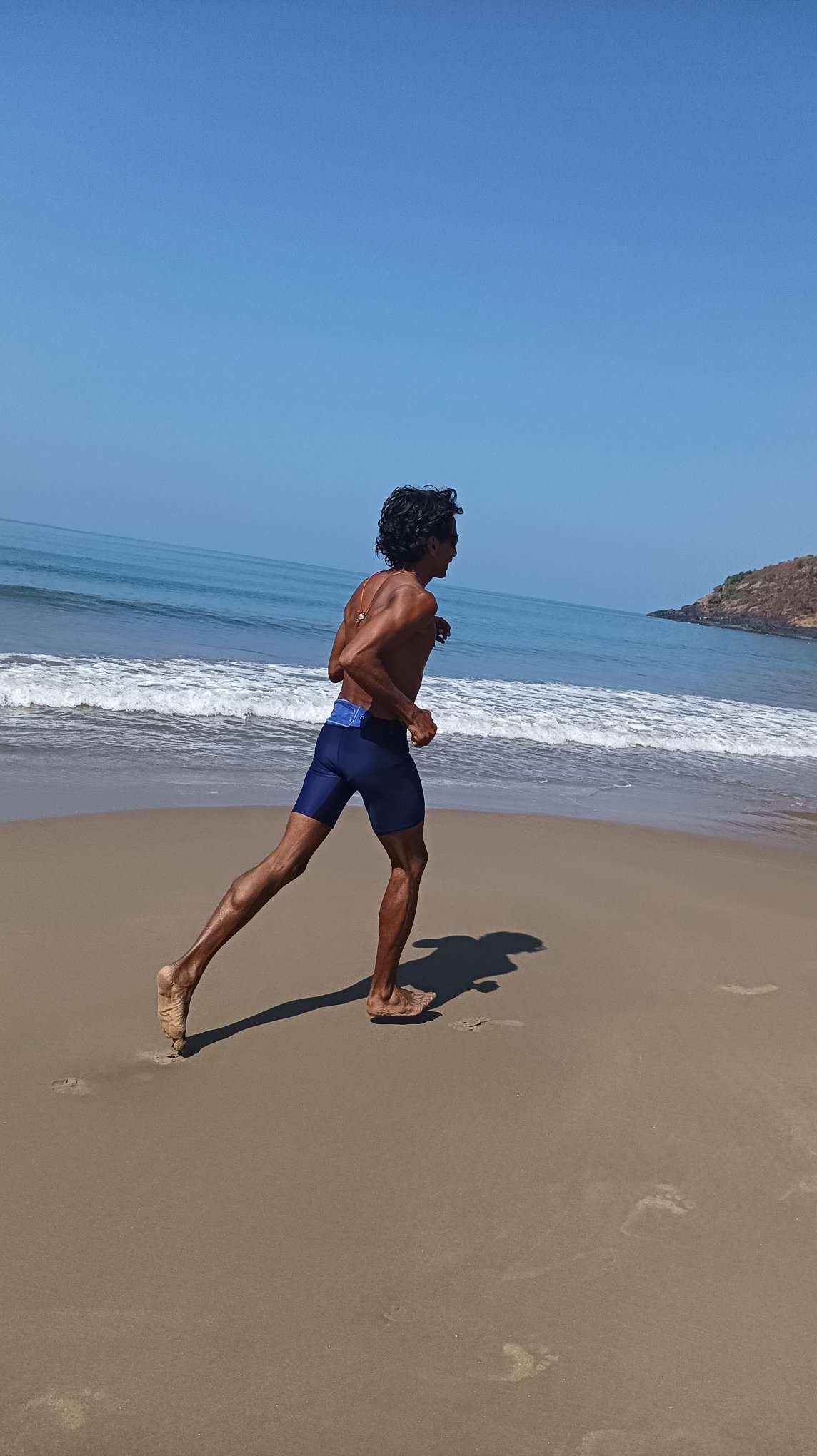
- The mind and body after 40
- Make or break point
- Assess your health and fitness for running after 40
- Run on roads or run on treadmills
- What does it take to start running after 40?
- I don’t have the time for running after 40
- Flexible and scalable training plan
- Start with walk and run intervals
- Running shoes for running after 40
- Warm up before running
- Stop if you have to
- Eat right for running after 40
- Muscle strength for Running after 40
- Flexibility and mobility
- Sleep well
- Set realistic goals and approach the progress wisely
- Running after 40 – Conclusion
This blog post is not about me – it’s about you, if you’re planning to start running after 40. I’ll highlight the circumstances and challenges runners face beyond 40, along with the solutions that helped me overcome them. If you’ve decided to begin running in your 40s, the time to act is now. Stop overthinking, lace up your shoes, and take that first step.
In this article, I’ll dive straight into what it takes to run six days a week once you’ve crossed 40. How do you start running at this stage of life – and keep going daily, week after week, month after month, year after year? Let’s break it down.

[I will not repeat the benefits of running in this post. You can click here to read about it in one of my previous posts]
The mind and body after 40
If you’ve spent much of your 30s without running or doing regular workouts, your body will inevitably start showing signs of decline in your 40s. Ageing after 30 brings steady loss of muscle mass and joint flexibility. The sooner you recognize those signals, the better prepared you’ll be to act.
The good news: fitness can be regained at any age. What you need is a clear plan and the dedication to follow it. Regular running slows deterioration, rebuilds strength, and revitalizes both body and mind – you may even find yourself looking and feeling younger.
If you haven’t trained for years, your muscles and lung capacity will have weakened. Mentally, you may have accepted declining health as “normal,” which blocks positive signals and undermines confidence. Doubts about your ability, fear of injury, and awareness that recovery takes longer after 40 are natural – but they’re not permanent barriers.
The body may age, but resilience is a choice – and running is one of the strongest ways to claim it
Make or break point
At this stage, both your body and mind may feel unprepared. Many people over 40 get stuck here – the desire to run fades, doubts creep in, and motivation slips away. They know running is good for them, yet hesitation wins. Eventually, they convince themselves their fitness days are behind them.
But that belief is false. Don’t let it happen to you. Giving up before you even try is the real failure. Don’t be afraid to start – the greater risk lies in what happens if you don’t.
Even if you doubt your body’s ability right now, push your mind to take the lead. Your body can adapt and strengthen over time, but the first step requires mental resolve. Motivate yourself, encourage yourself, and simply show up for the run. The rest will follow.
Your body follows where your mind dares to lead!
Assess your health and fitness for running after 40
The first step is to assess your current strength, agility, and endurance. Accept that at 40 you’re a beginner runner – even if you were a great athlete in your 20s. A decade or more without consistent workouts means your body has changed. Running in your 40s is not the same as in your 20s. Back then, warmups felt optional; I could jump straight into a football game and go full throttle.
Things are different now. Today, I need a proper warmup before every run. If you don’t have any health concerns, you can test yourself directly on the trail or treadmill. But if you already have a medical condition, it’s wise to consult your doctor for an evaluation before starting.
Quick Self-Assessment Checklist
Before you begin, take a moment to check:
- Strength: Can you comfortably do 10-15 bodyweight squats or push-ups?
- Agility & Flexibility: Try simple stretches – do your joints feel stiff or restricted?
- Endurance: Walk briskly or jog lightly for 10 minutes – are you out of breath too quickly?
If any of these feel challenging, don’t worry – it simply means you need to start gradually and build up.
Every check is not a limit – it’s a starting point.
Run on roads or run on treadmills
I love outdoor running, but it isn’t always practical for city dwellers – unless you head out in the early hours. If you don’t have access to a proper trail or park, treadmill running is a great alternative. It offers a safe, controlled environment where you can adjust speed and incline to suit your needs. When I lived in the city, treadmill sessions gave me both thrill and satisfaction, and they kept me hooked on running for life.
Treadmills are safer in many ways: you control the pace, the surface, and the environment, without dealing with unpredictable traffic or terrain. Later, after moving out of the city, I switched to road running and have been doing it for about eight years. While treadmill running differs from outdoor running, don’t let that worry you when starting after 40. The key is to make the best use of what’s available and simply get started.

I’ve been running on the road for about eight years since moving out of the city, but I still turn to treadmills during the monsoons or when I want to focus on speed. Yes, treadmill running differs from outdoor running, but that shouldn’t concern you when starting after 40. The real key is not whether you run on a road or a treadmill – it’s that you run. Make use of whatever option is available to you and take that first step.
Whether it’s the road or the treadmill, consistency is what truly carries you forward.
What does it take to start running after 40?
I don’t have the time for running after 40
Many people say they don’t have time for workouts. And I get it – life in your 40s is full of responsibilities, with financial security often taking center stage. I’m in that hustle too, constantly finding ways to get resourceful results.
But here’s the question: what’s the point of all that money if your body isn’t healthy enough to enjoy it? I don’t claim to have all the answers, but I do know this – I don’t want poor health to make me dependent on others. I choose fitness so I have the strength to keep hustling toward financial freedom.
Time is a valid concern. You may truly feel there’s no way to dedicate an hour every day. But sometimes “I don’t have time” is just a cover for lack of motivation. Be honest with yourself: can you squeeze out even 30–40 minutes?
Most of us spend more than that scrolling on our phones or watching TV. If you can carve out even a small window for doing a workout, grab it with both hands. It doesn’t matter whether you run in the morning, evening, or night – what matters is consistency.
A Simple Starter Routine
- Warm-up: 5 minutes
- Run/Jog: 20 minutes
- Stretch: 5 minutes
As you get fitter, your body will naturally demand more. You’ll find ways to make extra time.
It helps to run at the same time each day – your body thrives on rhythm, nutrition, and rest cycles. But life happens. If you miss your usual slot, reschedule later that day. If an unexpected situation forces you to skip, don’t let it stretch into idle weeks. Get back the very next day, with double enthusiasm.
Running has become part of my lifestyle, like coffee or food. If I know I’ll be busy during my running hour, I prepone my session. And when I do miss a day, I accept it with a little sadness – but I always return stronger the next morning.
The first step in running after 40 is not finding time – it’s making time
Flexible and scalable training plan
In the beginning days, you may have to force yourself to go out there for training, but it will slowly become an indispensable part of your lifestyle. Runners who felt that a 20-minute session was a big deal have gone on to do 1 hour easily. It may take a few months or even years to upgrade your skill levels, but you must be at it daily. The idea is to make optimum use of a session to get the best results and satisfaction.
It would be best if you had a proper plan for your sessions to make that happen. It helps you to be mentally prepared before the session and know exactly what you are going to do. If needed, you can get help from your fitness trainer to create a customized training plan. You may take many days to develop the proper plan if you start independently. Read your body signals while running and resting to identify your strengths and weaknesses.
Create a plan to address those weaknesses to unlock new levels of fitness. The plan should not be like something written on a stone because it has to be flexible for changes. The changes will be progressive when you make performance gains. On the other hand, you will have to go two steps back on the plan if you get injured, more so if it is severe. A proper plan helps you become mentally prepared to go out there and do what you love doing.
Start with walk and run intervals
You can start with walks to assess your strength and endurance, but the goal is to be able to run. It is especially helpful for beginners or those starting after many years. As you keep getting comfortable on your walks, you can start running at a slow pace to take it to the next level.
You will have to push yourself but not too much. You must focus on your running form and avoid taking long strides. It helps to prevent injuries and improve performance. You can slow down or continue walking if you feel pain or breathlessness. You must resist the urge to stop completely and keep going for some more time.
Don’t drink too much water because your body will start cooling down. 1 or 2 sips to wet your throat should boost you. Keep your body warm. I use these struggle situations to test and improve my endurance.
Your muscles, tendons, and joints will become stronger if you keep up with this routine for a few weeks. You may not like this training phase because it is mostly a struggle. It is tough to get the rhythm and hold it till the end, but if you need the grit to go through this phase. Keep at it daily, and you will slowly start enjoying your sessions.
You will know the right time to keep running without slowing down. After that, you will not want to walk till you reach your distance goal. Walking is excellent, but runners must overcome it at some stage to run continuously from start to end. You will need to push yourself to unlock new skill levels.
Don’t be in a big rush to do more distance or speed because the progression will take time. It took me years to keep increasing the target distance while maintaining the pace, 1 km at a time.
Running shoes for running after 40
When it comes to running shoes, you are spoilt for choices. You get running shoes for a wide range of price tags but don’t just go for the cheapest ones unless you are convinced of the quality. You must make a balanced choice based on your usage and budget.
Besides the price tag, you must look for important things like the quality and shape of the soles, breathability of the material, cushioning for heels, quality of inner soles, weight, quick-drying property, comfort for the toes, durability, etc.
No matter how expensive shoes you buy, they will lose their shape with a few months of regular running. Your legs generate a lot of heat while running. You must change the shoes when they go out of shape because it affects your running form and performance. Worn-out shoes increase the chances of ankle and knee injuries. I burn a pair of running shoes in about 2-3 months, so I don’t buy overly expensive ones. I like the ones I use because they are lightweight, comfortable, and breathable.
Warm up before running
Proper warm-up sessions help to prevent injury, increase breathing rate, and improve flexibility. It also helps you to prepare mentally for the run. Before you start running, make sure that you do a few warm-up drills to activate your feet, ankles, knees, and hips. A good warm-up session should last for about 10 minutes. It should be long enough to warm you up and activate your muscles and joints, but it should not tire you. Save your energy for the run.
Stop if you have to
Let’s face it. Your body will feel the pain of impact and stretches of running after 40. Even the best runners feel it, but they have increased their endurance and strength to manage it. When you start running, you need to figure out your endurance threshold. You may know how fast you run, but you don’t know how much time and distance you can do while maintaining the speed. Also, you may be unable to tell if you are genuinely exhausted or if your mind is just finding an excuse to quit.
On the other hand, experienced runners can read the situation, find a way to navigate it, and complete the target miles. It is normal to feel a little sore at the start of the run, but it usually dulls down after a few hundred meters. You must learn to differentiate between normal soreness and concerning pain to avoid injury. New runners over 40 should consult a physical therapist if they experience persistent discomfort for many days.
Every day will be different, even if you are running every day. You may feel great and charged up on some days, but you may not feel so on a few other days. New runners may have to force themselves to get to the trail, ground, road, or gym on such days. It is another make-or-break point in your journey of running after 40, because you could quickly lose motivation and start skipping sessions.
I cannot stress enough that not all days will be the same. For example, you may not be able to get optimum energy if you do not sleep well or eat right, and this is where your resilience comes into the picture. Your body may say no for the last few miles. These are the moments when I run with my heart. I have been doing this for more than 15 years, so I know when it is too early to press the panic button.
You may happily cruise on the track on most days, but you will have to double up your effort on some days. Something needs to be fixed, and pushing harder on track may not be a good idea for beginners. Expert runners can keep going and pick up the rhythm again. You can slow down or stop if you cannot maintain the form and build the rhythm that day.
It’s okay to stop if you cannot penetrate the strong resistance from the threshold that day. You must believe it is a temporary phase, but you cannot find a solution in your living room. You can stop or cut short your running session for that day, but you must return with renewed energy the next day. Strength training or mobility workouts can help you identify your physical limitations and find the solutions.
It takes years to make running a part of your lifestyle, and your experience will guide you to tackle such situations. Get familiar with the pain and joy because you will experience them both, and not in any particular sequence. Your resilience and dedication will be tested, and how you respond to them will determine if you become a runner for life.
Eat right for running after 40
Those who run regularly after 40 must pay extra attention to the food they eat. Your choices should help you fuel your running or workout sessions and keep your body weight in check. Your body system may not respond the same way as another person who follows a similar diet. You must identify the kind of food that goes well with your system.
Broadly speaking, your food choices for running after 40 must be according to age, sex, weight, health condition, lifestyle choices, and intensity of your physical or sports activity. Ideally, your diet must include a proper balance of minerals, vitamins, lipids, proteins, and carbohydrates in a proportion that works best with your system. Remember to keep yourself hydrated with water and other fluids.
The rule for those seeking weight loss is simple. You will need to create a calorie deficit to shed weight. What it means is that you must use more calories than your intake. You can check the ideal BMI for your body and set it as the benchmark, but give yourself a realistic timeframe to achieve your goal.
From my point of view, there are no hard and fast rules on what you should eat and what you should not, as long as you burn it. Sometimes, I learn things the hard way after I have eaten some wrong food. It affects my digestive system and running performance on that day. I try my best to avoid foods that cause problems, but sometimes I give in to the temptation of sweets or deep-fried food.
The point is we are not robots. We follow discipline and watch our diet every day. Still, we cannot totally resist the innate temptations and expect them to eventually disappear without causing any difference to our system. It is better to release the bottleneck and ease the frustration of not being able to eat something you like. If you are disciplined with diet and daily workouts for 6 days a week, you deserve a cheat day on the 7th day. Eat whatever you want, but get back to training the next day.
Some people eat the right food but still struggle with weight gain. The bigger problem than what you are eating is how much you are eating. Watch the potions you eat because intake moderation is the key to your diet’s success. Also, not following proper food timings can make our brains send wrong signals. Then we get so hungry and fill our plates with food for 2 people.
Your diet for running after 40 can be managed by paying attention to what you eat, when you eat, and how much you eat.
Muscle strength for Running after 40
Running is a repetitive activity that requires constant and coordinated support from different muscle groups. It is comparatively more effortless when you are young and have strong muscles. You did not need weight training those days but could play football every evening. Runners after 40 must address the decline in muscle mass to extend their running journey. Therefore, you will need at least 2 to 3 sessions of strength training a week to maintain your muscular mass and general fitness. You must train all the muscles in your body and not just your legs. You need a strong back, a good pair of shoulders, a strong neck, and good arms to maintain your form while running.
Long-distance runners do not develop huge bulk muscles because of high caloric burn. Also, running for about an hour or more with overly big muscles is not so comfortable. The goal of weight training for runners is to increase muscle strength so that they constantly support the dynamics of running. You may look leaner, but your muscles will be strong.
Strong muscles will not only help to improve your running efficiency but also to prevent injuries. They cushion the impact of the ground on the joints and help to maintain the posture. I will write about specific knee and ankle exercises in my upcoming posts. Your weekly training regimen must include 2-3 strength training sessions for long-term results and progress. Then, there is another critical aspect of training that runners after 40 tend to neglect.
Flexibility and mobility
You will have noticed that your body is not as flexible as it was in your younger days. As you age after 40, the connective tissues (between the joints), like tendons and ligaments, get tighter or weaker. Your tendons cannot stretch and give optimum mobility, and your muscles do not elongate enough to allow a full range of movements at the joints.
You may push your joints because your muscles are pumped with strength training, but your ligaments and tendons cannot sustain the pressure of running after 40. They may eventually start degenerating or even snap off. You may know how you got tendonitis because you cannot pinpoint when it began. It just kept degenerating after that, and you realized it only when the pain became uncomfortable or unbearable.
Once there is a problem with the joint, it creates a cascading effect on the muscles around it, and they become weak. The excruciating pain will not allow you to do full-fledged strength training. You will have to take 2 steps back and start with rehabilitation. Again, this kind of injury can make or break your running motivation. It has happened to me, but I have always believed in healing and working towards becoming stronger.
The point is that you must pay attention to the importance of flexibility and mobility exercises if you want to extend your running journey after you reach 40. I do Yoga once a week for about 50-70 minutes, and I can tell the difference while running. I don’t feel any tightness of muscles or joints, so it works best for me as a weekly realignment routine. You will see better results if you include more sessions.
Besides Yoga, there are many other stretching alternatives that you can try. Some are Pilates, Tai Chi, Barre, Ballet, Qigong, Calisthenics, acrobatic gymnastics, etc. It is all about the choices you make. You can choose whichever program you like, but you will see results only if you are consistent with your effort.
Sleep well
Proper rest is crucial for your running progress. We reduce sleeping hours to accommodate our professional, personal, or social obligations. Sometimes, it is unavoidable, but depriving ourselves of proper sleep can cause serious health issues in the long run. Sleep is more than just resting our body; our muscles repair themselves at that time.
It helps you recover and return strong for your next training session. Restful sleep makes a significant positive difference to your running performance and experience the next day. It is especially true when you start running after 40.
I recommend 8 hours of sleep daily to sustain the passion for running after 40. I split my sleep time into 7 hours at night and 1 hour after the running session. It allows me to recover from the impact of running and gives me a power boost for the rest of the day. I can easily do a swimming, Yoga, or strength training session later in the day.
Set realistic goals and approach the progress wisely
As a beginner runner, you must go through the grind before you start enjoying it. Once you make it a part of your lifestyle, you will know whenever your muscles, joints, and mind are ready for the level-up. It comes to you after running daily for many months or years.
You may see faster runners on the tracks, trail, gym, or TV, and you wish to do it like them. The difference here is they have done many years of practice and training to reach that level. As a beginner, you must take time and avoid rushing into competitions. You may injure yourself if your muscles and joints are not ready to take it one notch higher. It is better to Increase the training intensity according to a structured plan, without focusing too much on races or competitive goals.
You should resist the urge to sign up for races prematurely. Give at least 5-8 months for training if you start running after 40. You must first acclimatize to the physical and mental changes that running brings.
Running encourages people to set new challenges, but you must set realistic goals and approach the progress wisely. Participating in races and tracking results will motivate you to improve, no doubt, but proceed sensibly and patiently.
Running after 40 – Conclusion
Sticking to your training regimen with dedication and commitment will help to improve your pace and distance gradually. Once you become comfortable with 45-50 minutes sessions without any issues, you can consider experiencing the thrill of running your first race. You will go through many emotions and experiences to reach that stage, and each one will make you stronger.
I am talking about making running a part of your lifestyle, which means you will be doing it year after year with no end in sight. Running after 40 will not be like a straight line leading to some destination of success. You are spending a good part of your life running and are bound to see the ups and downs. For me, the journey is more important than the destination I know nothing of. I don’t think too far because there is a goal to be achieved every day. I take it on a day-by-day basis and make attempts to improve with organic progression. It takes time, but the journey is totally worth it.
Want professional content writing services to turn your ideas into engaging blog posts that your readers love?
 Chat with Nady on WhatsApp
Let’s build your authority in the fitness and health niche together.