
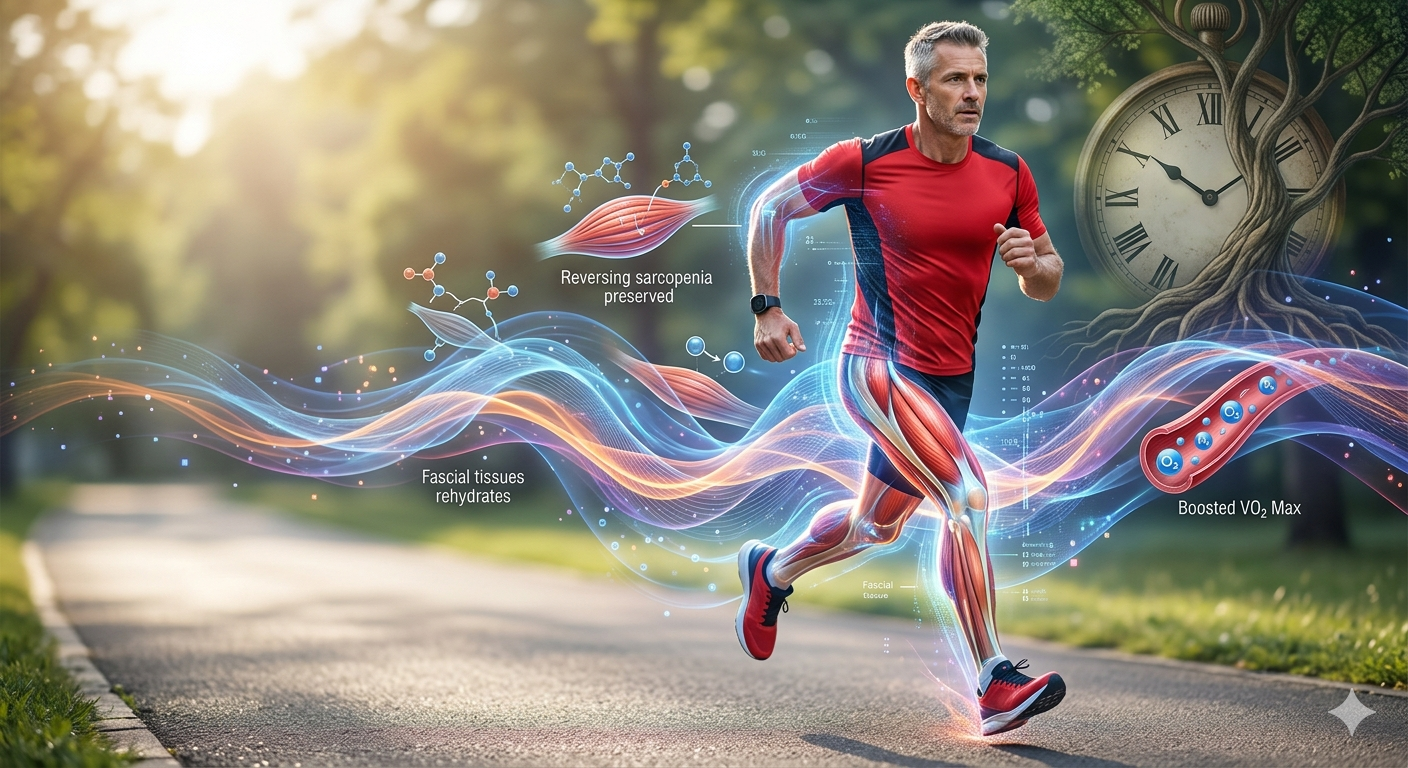
- Running After 40: The Science of Biological Regeneration
- The Internal Reset: Why Your 40s Demand Movement
- Why Running After 40 is a Biological Necessity
- The Psychology of the Midlife Stride
- The Result of the Recalibration: A Midlife Performance Edge
- The Three Pillars of Running After 40: Cardio, Strength, and Mobility
- Is it Possible to Start Now?
- Running After 40: Claim Your Next Chapter
- For – Brands | Businesses | Coaches
Running After 40: The Science of Biological Regeneration
Running after 40 is not just a possibility; for many, it is a biological turning point that can effectively slow down physical declines that come with aging. Unless you are managing a specific, long-term medical condition where high-impact activity is contraindicated, the human body remains remarkably adaptable well into midlife.
While the body operating system of our physiology begins to change, the core mechanics of movement stay intact, waiting to be reactivated through consistent effort. I can assure you from my own journey that crossing this age threshold does not mean slowing down; you need a solid intention and plan to adapt to the changes in your aging body.
The transition into midlife running is often transformative because it forces a confrontation with our sedentary habits. Most of us are inherently aware of the mounting need to maintain physical activity as the years pass, yet we often view it through the lens of obligation rather than opportunity. When you embrace the stride, you aren’t just checking a box for cardiovascular health; you are engaging in a comprehensive reset of your physical and mental state.
The impact of muscle and hormonal decline is felt across every system of the body after 40. From the mechanical strengthening of joints and muscles to the improved efficiency of your respiratory system, the physical upgrades of running after 40 are undeniable. Beyond the muscle, there is a profound “chemical shift” that occurs, leading to a level of mental clarity and emotional resilience that is hard to find elsewhere. This isn’t just about weight loss; it is about reshaping your mindset to handle the complexities of life with a sharper, calmer focus, and a highly functional body. Also read my blog on Hormonal Decline After 40 – How to Train Smart for Vitality
Achieving these results requires changing your mindset from the “quick fix” mentality. With over 15 years in the content industry and a personal running streak of 17 years, I have observed my work suffers when my physical health is not up to mark. My love for running removes the rustiness of sitting in front of my computer for hours, but it is not just a one-day thing. You need to recalibrate your body system every day.
The Internal Reset: Why Your 40s Demand Movement
To understand why this “recalibration” works, we have to look at the specific physiological changes that occur during this decade. While the focus is often on external biomechanics, the real transformation happens within your internal cellular environment.
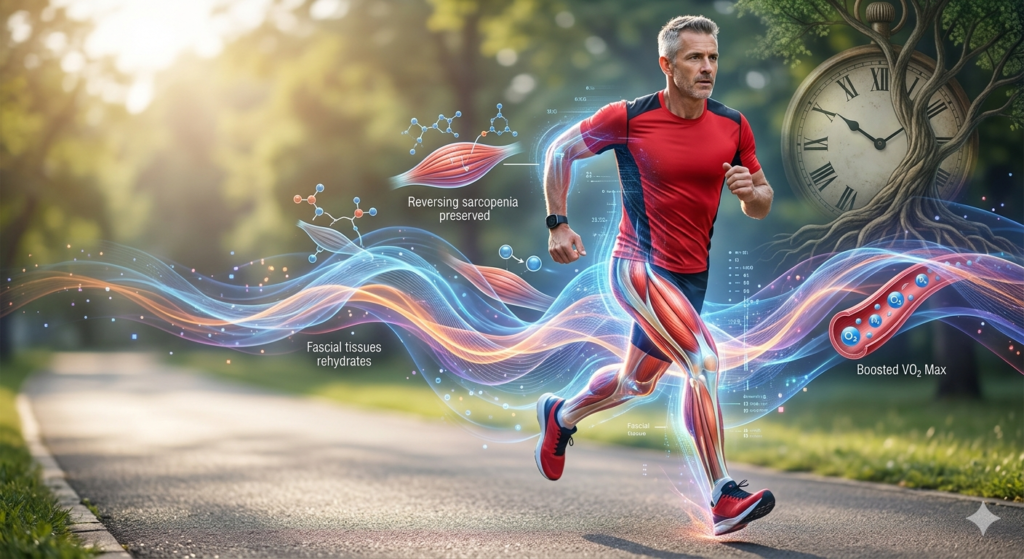
1. Reversing Sarcopenia Through Impact
Sarcopenia, the age-related loss of skeletal muscle mass, is a silent thief that begins as early as age 30 but accelerates significantly after 40. Research indicates that sedentary adults can lose 3% to 5% of their muscle mass every decade. Running provides the essential weight-bearing mechanical stress required to signal your body to preserve and build lean muscle. By engaging these muscle fibers, you aren’t just “running”; you are protecting your metabolic rate and structural integrity.
2. Fascial Rehydration and “Removing the Rust”
The “rustiness” you feel after hours at a desk isn’t just in your head; it’s in the complex web of connective tissue called Fascia. This web is woven throughout your entire body, existing both around and between muscles and organs, and is packed with countless nervous sensors. As we age, our fascia naturally tends to lose moisture and elasticity. The rhythmic, spring-like motion of running stimulates the rehydration and nourishment of these tissues. This “internal lubrication” is essential for maintaining the mobility and optimal functionality required for everyday life, essentially “removing the rust” from your physical chassis. Also read my post on Fascia Training – Unlock Your Hidden Power and Body Balance
3. Boosting Aerobic Capacity (VO2 Max)
Aging naturally leads to a decline in the heart’s ability to utilize oxygen efficiently. Many of us don’t realize that years of sitting and sedentary lifestyle have actually slowed down and shallow-ed our breathing. When we are anxious, our breath becomes short and fast, and we often forget the power of long, deep breaths to regulate our mood. Consistent midlife running effectively reverses this trend, helping to maintain or even improve your aerobic capacity (VO2 Max). This creates a vital fitness buffer that allows you to enjoy other high-intensity activities like swimming or badminton, without falling victim to the typical pains, aches, and fatigue associated with midlife.
Why Running After 40 is a Biological Necessity
At 52, I don’t feel the weight of the years because I treat my body with the same technical rigor I apply to my SEO content writing business. Running ensures my aerobic capacity remains high, which acts as a foundational power source for high-intensity sports like swimming, racquet games, and even competitive beach frisbee.
However, beyond the surface-level fitness, running addresses the “Biological Shift” that occurs when we hit our 40s. If you lead a sedentary lifestyle, your muscle strength, joint mobility, and breathing capacity don’t just “dip” – they begin to fade. If you ignore these signals in your 40s, the physiological “re-indexing” or comeback becomes exponentially harder as you age.
Combating Sarcopenia and the Ageing Trap
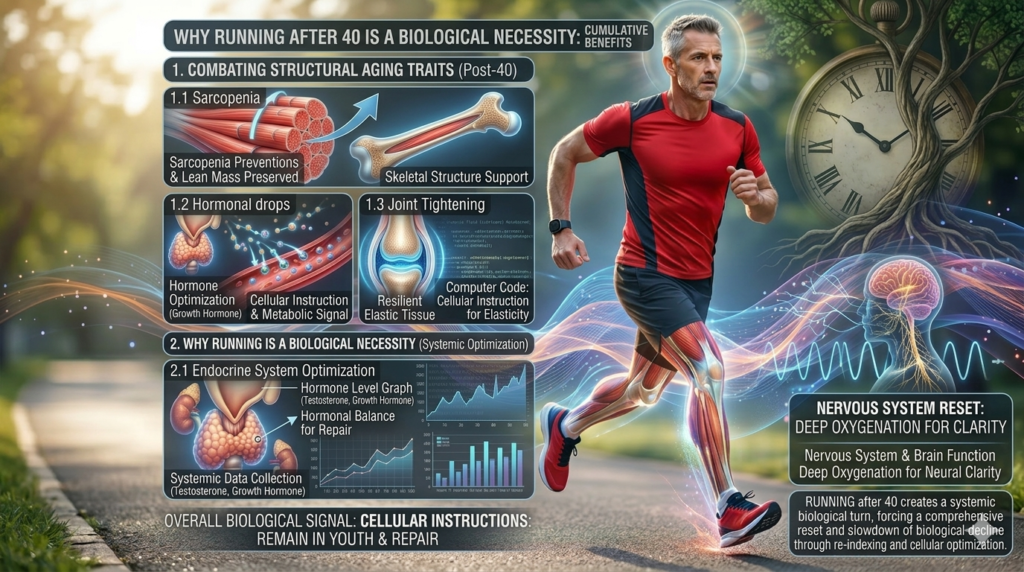
After 40, biological ageing accelerates, and your body enters a “use it or lose it” state. We face three primary structural threats:
- Sarcopenia: This is the natural, age-related loss of skeletal muscle mass. Without the mechanical stress of running or physical workouts, your muscles atrophy, leading to weakening of your metabolic engine.
- Hormonal Drops: Midlife often brings a decrease in the key hormones responsible for energy, muscle repair, and recovery.
- Joint Tightening: There is a natural reduction in synovial fluid (the lubricant of your joints) and a loss of elasticity in your connective tissues.
By showing up six days a week, you aren’t just “working out.” You are sending a high-level instruction to your cellular system to remain in a state of youth and repair.
The Psychology of the Midlife Stride
The true power of running after 40 is the chemical recalibration it provides for the mind. It is my primary channel for managing midlife aggression and stress. When anxiety strikes, our breathing becomes shallow, short, and uneven, which signals “danger” to the brain. Running forces a rhythmic reset, demanding deep oxygenation that physically resets the nervous system from “fight or flight” to a state of composed clarity.
The Result of the Recalibration: A Midlife Performance Edge
The internal shift that occurs when you commit to running after 40 is not merely physical; it is a holistic upgrade to your life’s operating system.
- Mood Management & Chemical Balance: At 52, I don’t require medication to manage my mood because running provides a natural, daily neurochemical balance. By forcing deep, rhythmic oxygenation, running resets a nervous system often stuck in a “fight or flight” response due to modern professional stress.
- The Mirror Test: There is a profound psychological boost that comes from seeing a functional, fit body in the mirror. I currently have a body that would have made me proud in my 30s. This isn’t about vanity; it’s about the confidence that comes from knowing your physical “chassis” is still high-performance.
- Relational Stability: The real win of this journey isn’t just the “six-pack” abs; it’s the internal composure. By offloading aggression and stress on the road rather than on colleagues or family, you maintain much stronger professional and personal relationships.
By maintaining this discipline, you aren’t just slowing down time; you are building a body that allows you to enjoy your hard-earned success and your “next chapter” of life to the fullest.
The Three Pillars of Running After 40: Cardio, Strength, and Mobility
Running after 40 cannot be your only workout. To build a runner’s body that remains resilient into your 60s and 70s, you must integrate Human Intelligence (HI) into your training framework rather than just mindlessly logging miles.
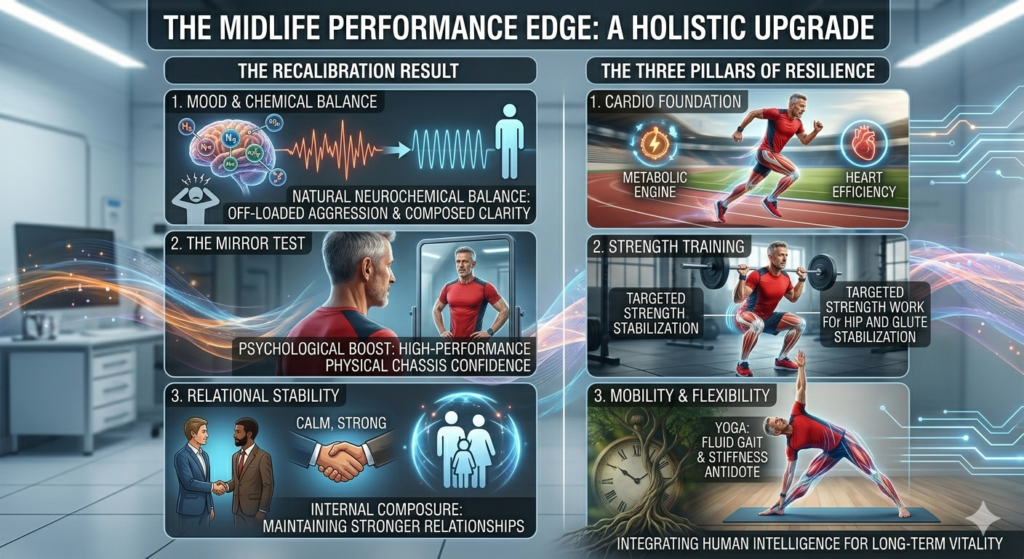
- The Cardio Foundation: Running six days a week provides the aerobic base necessary to keep your metabolic engine running and your heart efficient.
- Strength Training: You cannot be a strong runner with weak hips, glutes, or shoulders. After 40, targeted strength work is essential to support your joints, stabilize your stride, and prevent the injuries that often sideline aging runners.
- Mobility & Flexibility: Building a functional body is the ultimate antidote to midlife stiffness. I personally use Yoga at least once a week to improve flexibility and core strength, ensuring my running gait remains fluid and spring-like rather than jarring and restricted.
Is it Possible to Start Now?
This is the most common question in the minds of those who are thinking of running after 40. The straight answer is a resounding yes. If you can walk, you can run. However, you must acknowledge that if you haven’t pushed your body in years, your muscles and connective tissues have weakened. Going “full-throttle” on day one is a recipe for injury and a quick exit from the sport.
- The Progression: Use the “run-walk” technique. This strategy may take months, or even years to perfect, but it is the only sustainable way to build volume. Consistency is the only “shortcut” that exists.
- The “Zip-Up” Core: Focus on deep stabilizer muscles such as the Transverse Abdominis and Multifidus to protect your posture and balance while you run.
Running After 40: Claim Your Next Chapter
I have frequently seen people train intensely until “race day” and then immediately relapse into their sedentary lifestyles once the completion medal is earned. They talk about their past glory, but their current physical state tells a different story. Fitness is not an achievement that thrives on your history.
Fitness after 40 isn’t a phase or a temporary challenge; it’s a lifelong process that eventually becomes a core part of your identity. There are no magic pills or quick-fix hacks. You have to be gritty and face your own excuses daily to build the body that supports the life you want to live.
Are you ready to stop the clock? Running after 40 is the key, and after 17 years on the road, I can vouch for that personally.
For – Brands | Businesses | Coaches
If your brand or website needs top-quality blog content or end-to-end blog management, chat with me today. I create content with the same clarity, science-backed storytelling, and motivational rhythm you just read.
I offer blog management and content writing services across diverse sectors, whether your niche is fitness and health (my favorite), technology, lifestyle, or business – I specialize in turning topic ideas into engaging, SEO-optimized blog posts that your readers will trust and love.
Let’s build your business authority online with content that delivers both value and results.
 Chat With Nady on WhatsApp
✍️ Explore Our Blog Writing Services
Chat With Nady on WhatsApp
✍️ Explore Our Blog Writing Services
Great going Brother
You are inspiring ✨️
Thank you bro 🙂
Great Nadeem
Thank you bro 🙂